Tell us about the job
Takes about a minute. No obligation.
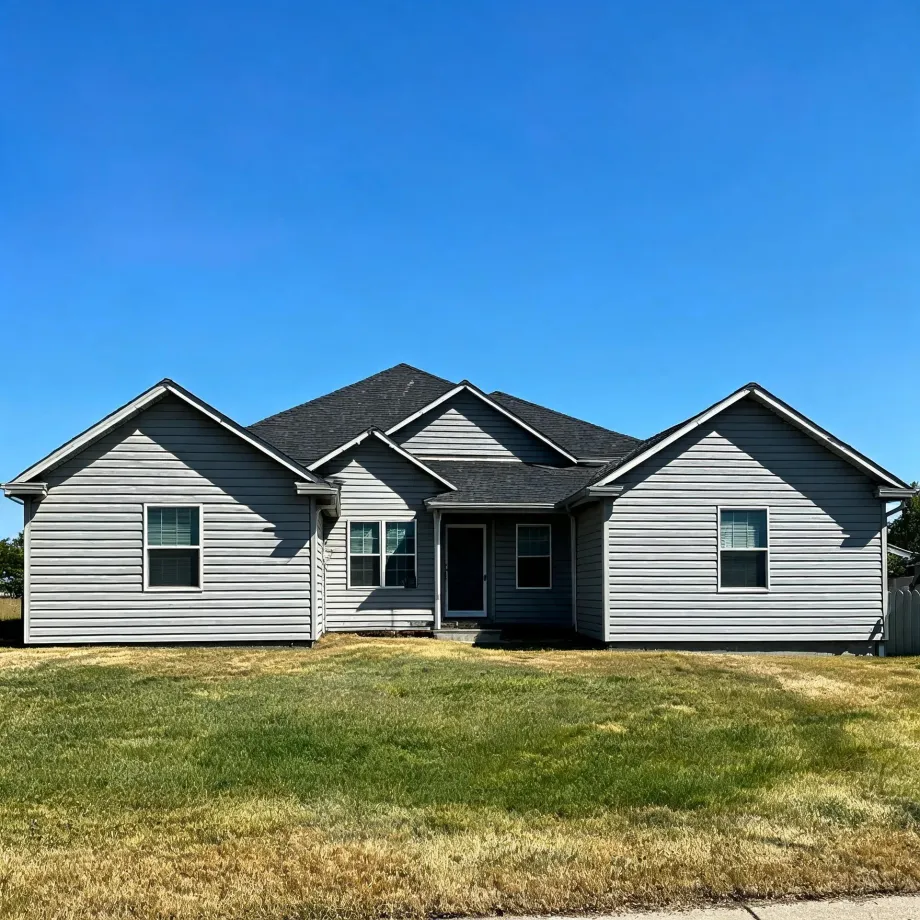
Sizing a mini-split here is a heating problem, not a cooling one. Homes in Chittenden County, VT have essentially no cooling season — no month of the year is warm enough to call for it. The compressor carries its wear through cold months, cycling hard against low outdoor temperatures where capacity is already falling, and the refrigerant circuit and heat exchanger take the full burden of that work. A unit that is undersized for the heating load will run longer and harder in exactly the conditions that compress it most. Contractors quoting in this county establish cold-weather capacity first, because that single variable decides whether the system holds or fails when the house needs it.
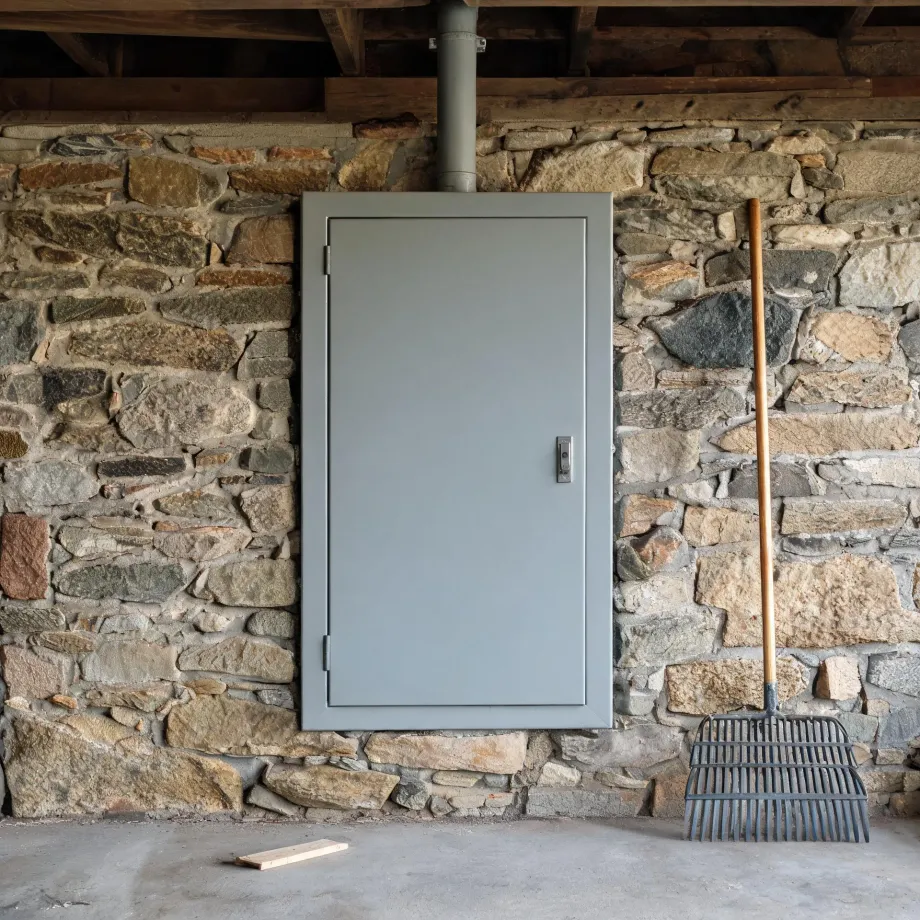
Electrical panels in houses built for older, lighter loads often cannot absorb what a mini-split installation draws without an upgrade. Half the homes in Chittenden County, Vermont were built in 1981 or earlier (2020-2024 ACS 5-year). That history shapes what a contractor has to price before the equipment itself enters the conversation: the panel gets examined, its current capacity gets measured, and any shortfall gets quoted alongside the unit. Ductwork is not part of a mini-split job, but the electrical is, and in stock of this vintage it is where the real variable sits.
What a Mini-split Installation Covers in Your Home
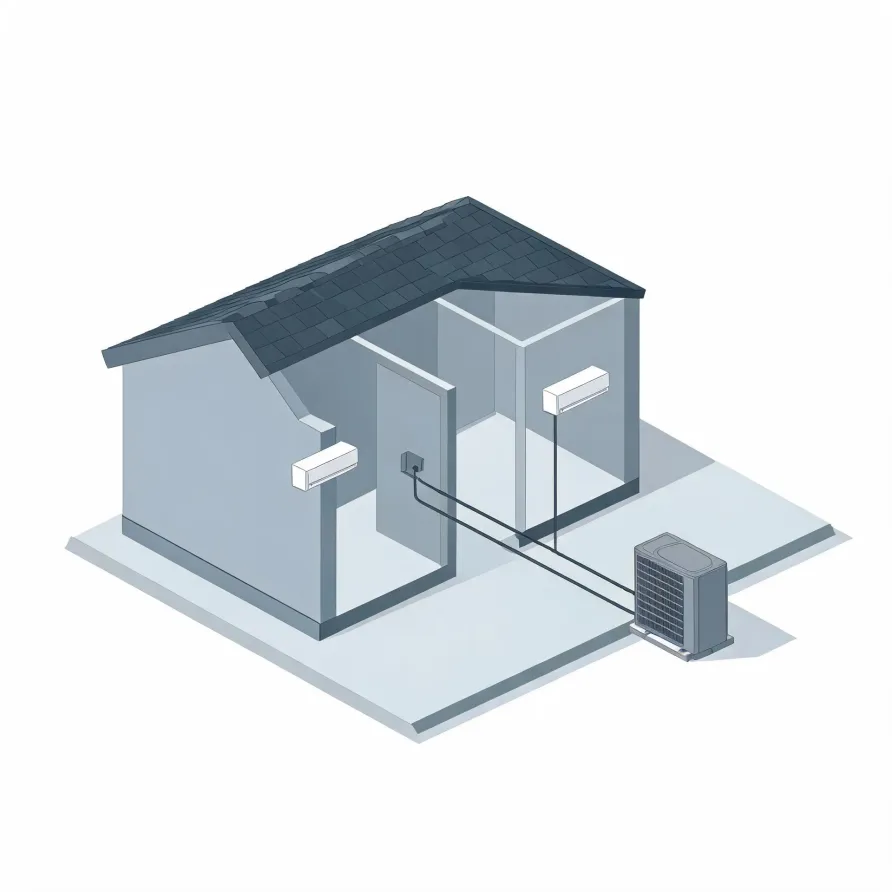
The indoor air handler mounts high on a wall inside the room being conditioned, and it is the piece the homeowner sees every day. The outdoor unit sits on the ground or a bracket outside the house and holds the compressor and condenser coil. Each indoor unit serves the zone it is mounted in.
A refrigerant line set runs through a small opening in the wall to connect the indoor and outdoor units, carrying the working fluid between them. A condensate drain line runs from the indoor unit to move moisture out of the house, and a communication cable ties the two units together so they operate as one system.
The drawing here shows a representative layout, and a licensed contractor determines exactly how each component is positioned and routed for your specific home.
Find a contractor in Chittenden CountyChittenden County, by the numbers
196 severe weather events were recorded in Chittenden County, Vermont between 2015 and 2024.
NOAA National Centers for Environmental Information, Storm Events Database, bulk CSV export, events 2015-01-01 through 2024-12-31.Half the homes in Chittenden County, Vermont were built in 1981 or earlier (2020-2024 ACS 5-year).
U.S. Census Bureau, 2020-2024 American Community Survey 5-Year EstimatesChittenden County, Vermont holds 74,888 housing units (2020-2024 ACS 5-year).
U.S. Census Bureau, 2020-2024 American Community Survey 5-Year EstimatesOwners occupy 63.9% of the occupied homes in Chittenden County, Vermont (2020-2024 ACS 5-year).
U.S. Census Bureau, 2020-2024 American Community Survey 5-Year EstimatesCodes & Standards Governing Mini-Split Work in Chittenden County, Vermont2 sourced rules and standards
Licensing and Legal Requirements in Chittenden County, Vermont
Vermont splits the trade across two specialty licences and a contractor may hold one without the other: field A1 covers automatic gas or oil heating including geo-thermal and ground source heat pumps, and field C3 covers refrigeration or air conditioning including air-to-air heat pumps.
Vermont reaches HVAC work through its electricians’ licence rather than an HVAC licence, and the requirement stops at the front door of a house: anyone performing electrical work in Vermont must be licensed as an electrician unless the work is in a residential building containing two or fewer dwelling units.
Severe Weather Events in Chittenden County
Heating and cooling equipment works against the outdoor climate, and the harder that climate swings, the harder the system has to work. A mini-split sized and installed for local conditions handles those swings without being overtaxed.
196 severe weather events, 2015–2024. Source: NOAA National Centers for Environmental Information, Storm Events Database.