Tell us about the job
Takes about a minute. No obligation.
Sizing a mini-split in Washington County starts with a single question: how much heat can this system deliver when outdoor temperatures drop hardest. Homes in Washington County, VT have essentially no cooling season — no month of the year is warm enough to call for it. That means the compressor, the refrigerant circuit, and the backup heat strategy all get specified around heating demand, because cooling puts no meaningful pull on the equipment here. A contractor working a quote in this county runs a room-by-room heat loss calculation before recommending any unit, because a system undersized for the heating load will run at its ceiling whenever the cold arrives and still fall short.
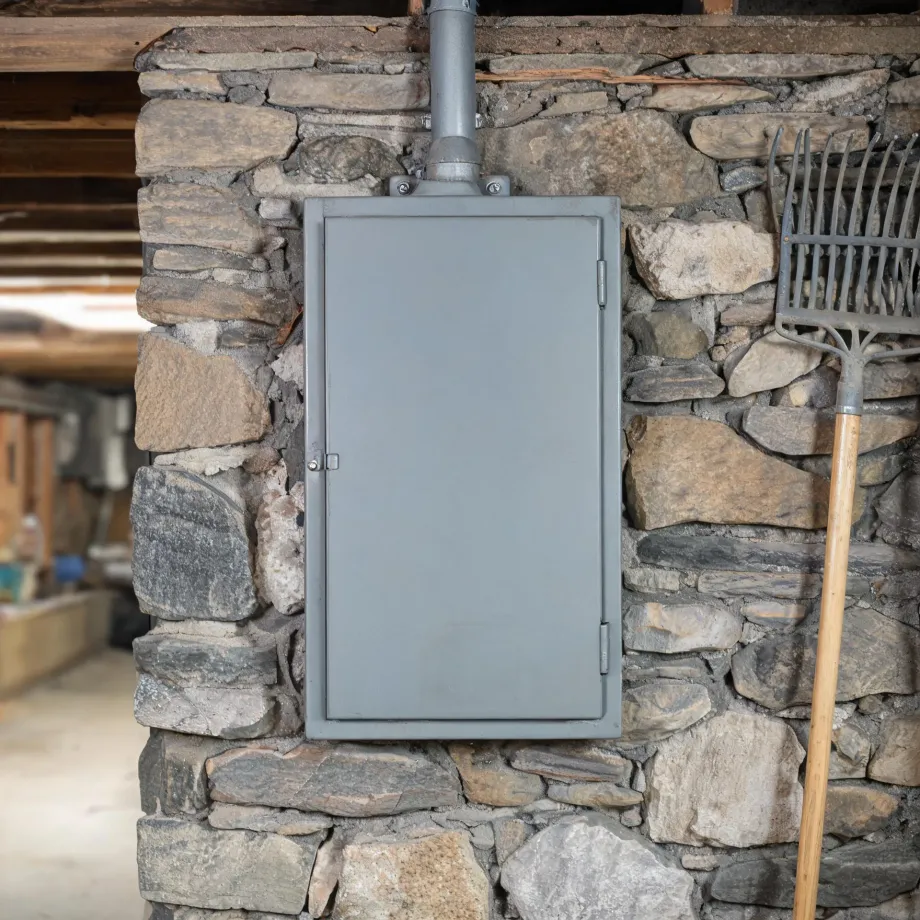
Electrical service in a house is sized for what the house was built to run. Half the homes in Washington County, Vermont were built in 1973 or earlier (2020-2024 ACS 5-year). The heating equipment those panels were designed around is gone in most cases, replaced over the decades with something different, and a mini-split draws its own load that the original service may not support without an upgrade. A contractor quoting an install here pulls the panel before the quote is final, because what the box can carry decides whether the job is straightforward or whether an electrician has to come first.
The Mini-split Components a Contractor Sizes and Places
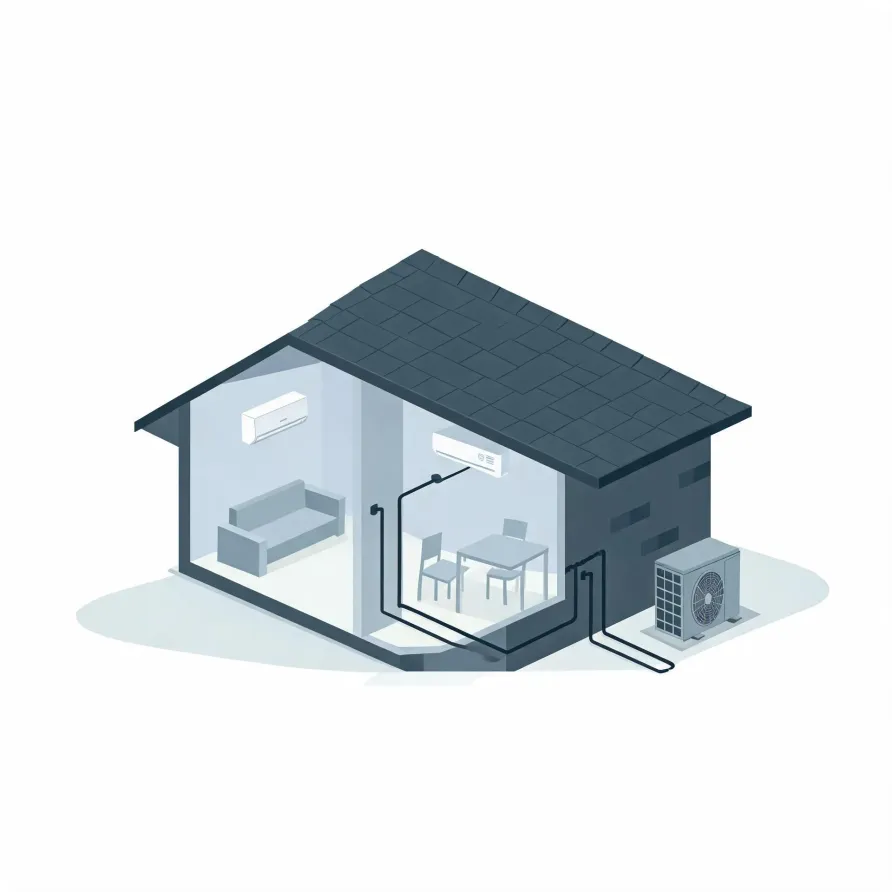
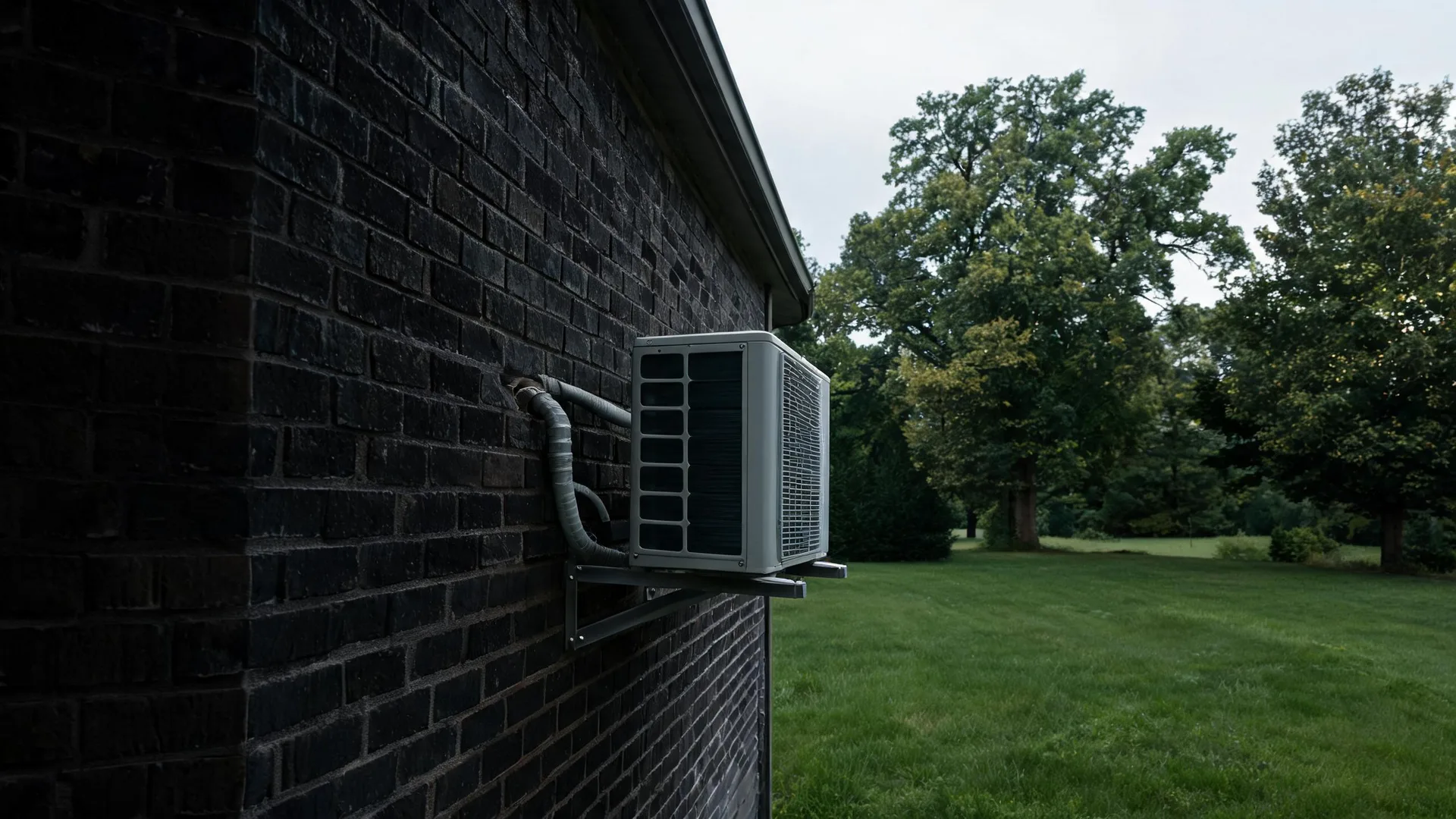
The indoor air handler mounts high on a wall inside the room and is the piece a homeowner sees every day. It draws room air across its coil and delivers conditioned air back into the space. Outside, the compressor unit sits on a pad or bracket against the exterior wall and carries the mechanical components that drive the whole system.
A pair of refrigerant lines runs through a small penetration in the wall to connect the indoor and outdoor units, and a condensate drain line carries moisture from the indoor handler to the outside. A dedicated electrical circuit feeds the outdoor unit, with wiring routed back to the panel to give the system its own protected supply.
The drawing shows a typical layout, and a licensed contractor determines exactly how each component is positioned and connected for this house.
Find a contractor in Washington CountyWashington County, Vermont, by the numbers
113 severe weather events were recorded in Washington County, Vermont between 2015 and 2024.
NOAA National Centers for Environmental Information, Storm Events Database, bulk CSV export, events 2015-01-01 through 2024-12-31.Half the homes in Washington County, Vermont were built in 1973 or earlier (2020-2024 ACS 5-year).
U.S. Census Bureau, 2020-2024 American Community Survey 5-Year EstimatesWashington County, Vermont holds 31,004 housing units (2020-2024 ACS 5-year).
U.S. Census Bureau, 2020-2024 American Community Survey 5-Year EstimatesOwners occupy 73.7% of the occupied homes in Washington County, Vermont (2020-2024 ACS 5-year).
U.S. Census Bureau, 2020-2024 American Community Survey 5-Year EstimatesCodes & Standards Behind Mini-Split Work in Washington County, Vermont2 sourced rules and standards
Licensing and Legal Requirements in Washington County, Vermont
Vermont splits the trade across two specialty licences and a contractor may hold one without the other: field A1 covers automatic gas or oil heating including geo-thermal and ground source heat pumps, and field C3 covers refrigeration or air conditioning including air-to-air heat pumps.
Vermont reaches HVAC work through its electricians’ licence rather than an HVAC licence, and the requirement stops at the front door of a house: anyone performing electrical work in Vermont must be licensed as an electrician unless the work is in a residential building containing two or fewer dwelling units.
Severe Weather Events in Washington County
Heating and cooling equipment in Vermont works against the weather, and the demands that weather places on a system vary by where you live. A mini-split sized and installed for local conditions holds up better and runs more efficiently than one specified for somewhere else.
113 severe weather events, 2015–2024. Source: NOAA National Centers for Environmental Information, Storm Events Database.