
Running the way it should
The unit sits clean and quiet against the wall, casing white, vents open and even. Air moves out steady when it calls for heat, no ticking, no long pause before it catches. Nothing on the wall below it but paint.
Vermont winters push well below freezing for weeks at a time, and when the house is heated by oil, the mini split is often there for one room, maybe the room someone is sitting in most. So when you hit the button and nothing happens, it feels urgent fast, especially if that room is where someone in the house actually needs the heat.
Cold weather mini splits are built to run through a Vermont winter, but every one of them has a low temperature cutoff built into its control board. If the outdoor unit senses a temperature below that point, it won't fire the compressor, even if the indoor head still lights up and takes your commands. That's by design, not a failure. On a night that drops well below zero, the unit may refuse to start at all. If yours is doing this on a day that isn't especially cold, something else is going on: a frozen coil, a stuck defrost cycle, or a sensor reading wrong. A contractor who works on these year-round can tell the difference quickly.
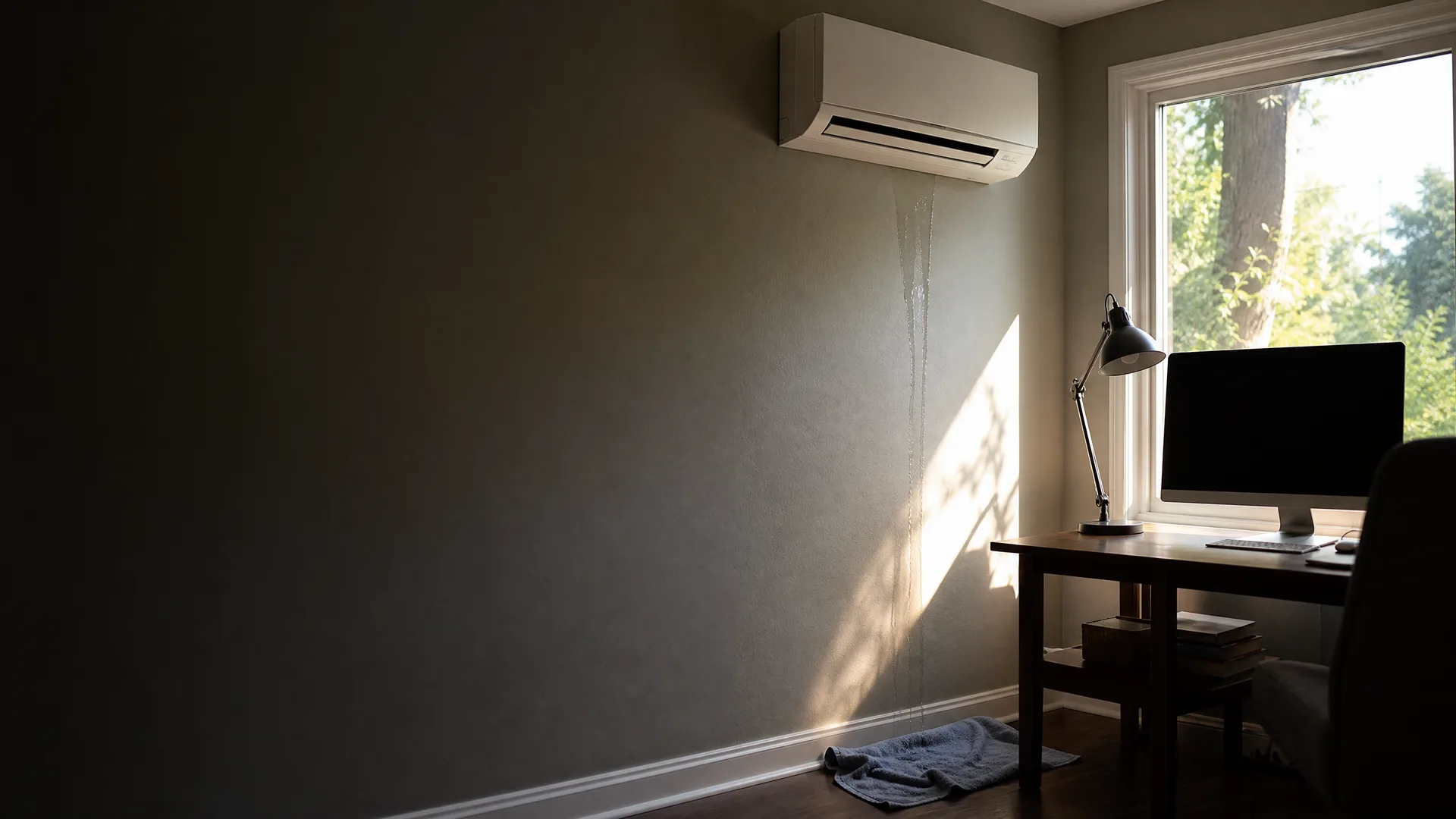
You're in the home office in the middle of the afternoon, the window open a crack because the air outside is warm but not heavy the way it would be further south. You look over from the desk and there's a streak down the wall under the indoor unit, already dried at the edges, dark and wet closer to the unit itself. You get a towel down on the floor before it reaches the baseboard. The mini split is still blowing air, you can hear it, but you shut it off anyway. You stand there a minute looking at the wall, trying to remember if you noticed anything dripping the last time it ran.






At that rate, a mini split that short cycles or runs flat out trying to heat a cold room costs you more here than almost anywhere else. When one stops working and you fall back on electric heaters or a struggling oil system to cover the gap, the difference shows up fast on the bill.
EIA-861 2025 statewide residential average
A mini split checks a string of conditions before it lets the compressor start, and a cold snap can trip any of them. The outdoor unit has a sensor that reads the coil temperature, and if that reading looks off to the control board, usually from frost or a short in the sensor itself, the board holds the whole system back rather than risk running the compressor against ice. There's also a delay built into most units, usually a few minutes, that keeps the compressor from restarting right after it shuts off, so if power blinked or someone bumped the thermostat twice, it can look like the unit is refusing to turn on when it's actually just waiting out its own timer. On the indoor side, the board is also watching the room temperature sensor, and if that sensor is reading colder than the unit's low limit, some models won't call for heat at all. None of this shows up as an error code most people would recognize. It just looks like nothing is happening.



Summer here isn't the problem, your winter cold snap is, but the same mini split still has to earn its keep in July. The dew point averages 59°F across June, July and August, measured over where Vermont homes actually sit, so the air is warm but never heavy. That's light work for the coil, nothing like the moisture load a unit further south has to wring out all summer. A system that's barely strained in August can still refuse to start once the outdoor unit is fighting frost in January. Someone local who services these units every season, through the easy summers and the hard winters both, knows that pattern and knows what tends to fail when the cold sets in.
NASA POWER T2MDEW county cells weighted by homes
A mini split that won't start in a cold snap isn't something to leave sitting while you wait and see. The longer it sits dead, the more that one room depends on a space heater or whatever the oil system can push into it, and on Vermont power rates that gap shows up fast on the bill. What you need is someone who already knows these units in this cold, not a first look at the problem. Send the request and it goes to one local contractor, someone who works on mini splits all winter here and has seen this exact lockout before, not a batch of calls going out to whoever answers first. From there it's off your plate. You stop running the space heater as a guess and start waiting on someone who already knows what's likely wrong before they get to the door.
The unit still turns on, but it's taking longer to warm the room than it did last winter, or it short cycles when the temperature outside drops hard. Nothing has stopped working yet. A contractor who knows these units can often catch a failing sensor or a coil that's icing early before you're left with a dead unit on the coldest night of the year, and the fix tends to be smaller when the system is still running.
The indoor unit is silent, the outdoor unit isn't doing anything, and the room it heats is already cooling down. At this point you're not choosing when to deal with it, you're managing how you heat that room until someone gets to it. A space heater or the oil system picking up the slack will cost more to run, and whatever failed, a locked-out compressor, a frozen coil, a bad sensor, still needs the same repair, just under more pressure to get it done.
You turn the thermostat up and the indoor unit runs, but what comes out of the vents feels like room temperature air, or outright cold. Maybe the outdoor fan has stopped turning. Maybe you hear it click and try, then shut back off within a minute or two. The room it heats starts losing ground, a degree or two at a time, and whoever is usually in that room pulls on a sweater or moves to wherever the oil heat reaches better. If this goes on through a cold snap, that room stops being usable the way it was, and the rest of the house has to make up for it.

The unit sits clean and quiet against the wall, casing white, vents open and even. Air moves out steady when it calls for heat, no ticking, no long pause before it catches. Nothing on the wall below it but paint.

The casing has gone dull and spotted with dust, the kind that builds up over seasons when the filter and coil behind it haven't been cleaned. A unit carrying that much grime has to work harder to move heat, and a Vermont cold snap is where that catches up with it.


A mini split that won't start in a Vermont cold snap almost always comes down to the same handful of things. Frost on the outdoor coil sensor, a defrost cycle that couldn't keep pace with the cold, or a filter and coil so dirty the unit was already struggling before the temperature dropped. None of that clears up on its own. The room depending on that unit keeps losing heat to the cold outside while the oil system tries to make up a gap it wasn't sized for, and on Vermont's power rates, covering that gap with space heaters adds up fast.
What makes the difference is who shows up to look at it. A contractor who services mini splits through a full Vermont winter has already seen an outdoor unit iced over like yours, already traced a defrost cycle that gave up partway through, already pulled a filter packed with enough dust to choke the airflow. That's not guesswork for them. It's the same handful of failures they check first because they're the ones that show up every cold snap in this state.
Sending the request puts you in touch with one contractor, licensed and local to Vermont, not a list of companies calling to bid on the job. You give the details once. From there, tracking down someone who knows this equipment and can get to the room that's gone cold is off your plate. That's the part that was taking the time. The rest is a conversation with someone who already knows what a Vermont winter does to these units.





Your request stays with one local pro.
There's no charge for the request.