Why your mini split smells when heating in Vermont
After you send the request, you're done searching.
A mini split that smells when it switches to heat usually smells like something burning, or something musty, right when you need it most. In a Vermont winter that's not a smell you want to live with for a week while you wait on someone to call you back.
Most houses here heat with oil, so the mini split is often doing work beyond the main system, maybe a bedroom that stays cold, maybe a whole addition. When it's off for months and then kicks on in October or November, dust that settled on the coil and in the blower wheel burns off first. That smell should fade in a few minutes. If it doesn't, or if it smells sour or musty instead, something else is going on, and that's worth a look before you run it through a long cold stretch.
With power rates here among the highest in the country, a mini split that's not running clean is already costing you more than it should. That's reason enough to get it looked at instead of just living with the smell.
Send the request and the search is off your plate. You're not the one calling around or waiting on hold. A local contractor who works on mini splits all winter, someone who knows what usually causes that smell in this kind of cold, gets the request directly. One contractor, not a handful of companies competing for your callback. No chasing quotes, no explaining the problem five times over. Just the one person who's going to look at your system, with your situation already in hand.
From here it's a matter of getting someone in to find out whether it's dust, a clogged drain pan, or something in the wiring, and getting your heat running clean again before the next hard freeze.
Why does my mini split smell when it switches to heat?
You turn the mini split over to heat for the first time since spring and a smell comes with it, sometimes like dust burning, sometimes something mustier. You've probably noticed it only happens on heat, not when it's cooling, and only when it first kicks on. With oil heat in most Vermont homes, the mini split might only run hard a few weeks a year, so this is the first you've smelled of it all season.
Dust sitting on the heating coil since last spring, burning off
A mini split's indoor coil does both jobs, cooling in summer and heating the rest of the year, and whatever settled on it while it sat idle gets burned off the first time it switches over to heat. That's the scorched smell. A mustier smell points to moisture that built up in the unit, often from a condensate line that isn't draining the way it should. Either way, the smell usually fades within the first hour of running. If it doesn't, or it comes back every time the unit cycles on, that's not dust burning off anymore. That's a sign something inside the unit needs a tech to look at it directly, before you're relying on it through a Vermont winter.
What's that smell telling you about your unit
Most people notice it in the first few minutes after switching the mini split to heat. A burning dust smell that fades after it runs a while is usually nothing worse than dust on the coil, but if it lingers or comes back every time you run it, something inside is staying dirty or staying wet. A musty smell means moisture sat in that unit since you last used it for heat, months ago if you switched to using window units or just didn't need it. Left alone, that moisture doesn't dry out on its own. It sits in the unit and gives mold somewhere to grow, and that's air you and your family are breathing every time the heat kicks on.
Wrong room for this one, wrong season too, but the smell doesn't wait for a convenient month. You're at your desk in January with the heat running and it hits you again, the same burnt-dust smell from last week, except tonight it isn't fading. Outside it's already dark at five and the woodstove in the next room can't make up for a mini split you're afraid to leave running. You've got oil heat for backup, but oil isn't free, and the whole reason you put a mini split in this room was to keep from burning it. You shut the unit off, open the form on your phone, and that's the last thing you have to figure out tonight.
No charge to send it. You decide if you hire them.
Why the smell is worse in winter
A mini split moves a fixed amount of air across that coil no matter the season, but in summer the air passing through is already damp, so dust doesn't sit and bake on the fins the same way. In winter the unit is drier and the coil runs hotter trying to hold a room against the cold outside. Anything that's settled there since last spring gets toasted the first time the heat kicks on. That's why the smell shows up with the first cold snap and not before.
What the motor is working against
Vermont winters ask more of the indoor fan motor and the heat strip or defrost cycle than a mild New England summer ever does. A motor running warmer and longer has less room to cover for a failing part before you smell it. Electricity here isn't cheap, so a unit already working harder to keep up with the cold is also one you don't want running inefficiently for weeks while a smell goes uninvestigated. The same strain that produces the odor is adding to what the unit draws to keep you warm.
Running clean
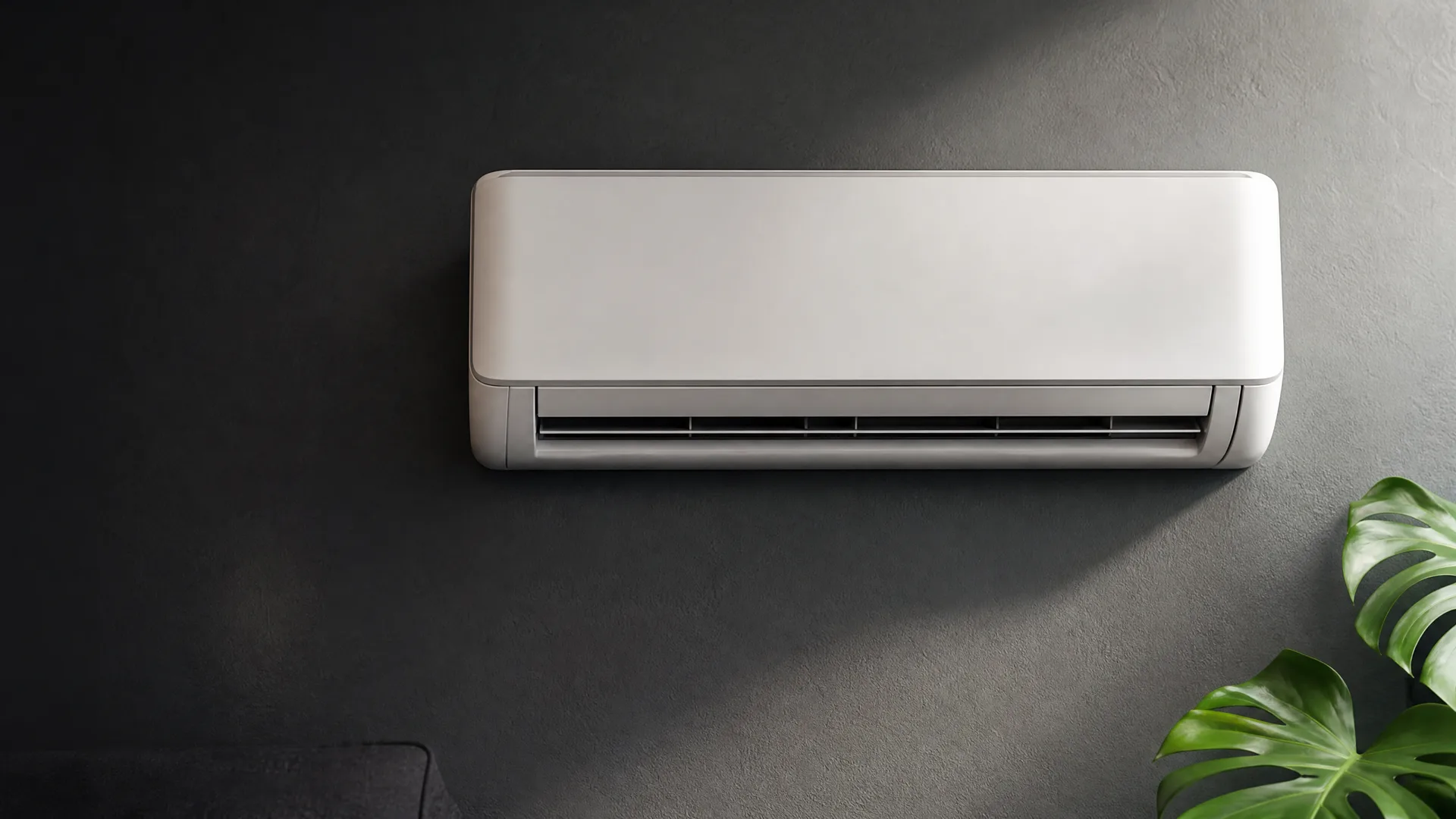
This is what it should look like: a clean case, no smell when the heat kicks on. Air moves across the coil and into the room without picking up dust or anything burning. If yours runs like this, the smell you're chasing isn't coming from a dirty unit.
Overdue for service
Dust and grime built up on the casing usually means the same thing is happening inside, on the coil and the filter. That's what catches heat when the unit switches over and gives off the smell. A unit left like this for a season or two needs more than a wipe-down to clear it.
Does the smell go away or stay
Smell fades on its own
A burning dust smell that clears up within ten or fifteen minutes of the heat running is usually just dust that sat on the coil since spring burning off.
It should only happen the first time or two you switch over to heat for the season, not every time you turn it on.
Once it's gone it shouldn't come back until next winter, when dust has had months to settle on the coil again.
No other symptoms come with it: no short cycling, no ice on the outdoor unit, no drop in how warm the air feels.
Smell keeps coming back
If the smell is still there after half an hour of running, or it's back again the next time the heat kicks on, dust burning off isn't the explanation anymore.
A musty smell instead of a burning one usually points to moisture sitting somewhere in the unit rather than dust on the coil.
A smell that comes with the unit cycling on and off faster than normal, or air that isn't actually warm, means something past the coil needs a look.
This is where it's worth having someone who works on mini splits through a Vermont winter take a look before you're stuck running oil heat alone for a week.
Waiting it out doesn't fix a wiring or drain problem, and running it while it smells wrong isn't free on power bills that are already among the highest around.
Vermont summers run mild, the kind without that heavy, sticky air. The average dew point from June through August is 59°F, according to NOAA climate data, which is on the dry side as these things go. That matters for the smell, because it means the coil in your mini split doesn't see much moisture most of the year. Less moisture means less chance of dust binding to the fins and rinsing off on its own. So the dust that built up over the summer is largely still there, dry and loose, waiting for the first heating cycle to burn it off. If your winters run drier still, that dust has even less reason to have gone anywhere on its own.
NASA POWER T2MDEW county cells weighted by homes
A clean mini split like this should run without any smell once the dust burns off that first time switching to heat.
A unit coated like this is holding onto dust, grime, and moisture in the filter and coil, and the smell won't quit on its own.
1
Heat mode pulls air across the indoor coil and filter.
2
Dust sitting on the coil since last winter starts to warm.
3
Warm dust burns off, carrying that burning smell into the room.
4
A musty smell instead means moisture sitting in the filter or coil.
Before you get your mini split repairAfter you get your mini split repair
Wait it out and see if it fades on its own, since that's what happens most of the first time you switch to heat each year. Some weeks you'll be right and it clears up in a few minutes.
Get it looked at by someone who works on mini splits all winter, and they'll know in minutes whether it's dust burning off or moisture sitting in the coil that won't quit without a cleaning.
Power costs 22.79 cents per kilowatt-hour statewide
At that rate, a mini split still costs less to run than most other ways to heat here, but it means a unit putting out weak, smelly heat is wasting money every hour it runs that way. Getting the smell sorted is worth more here than in a place with cheaper power.
EIA-861 2025 statewide residential average
Running clean
This is what the case should look like when heat kicks on, no film on the vents, no smell riding along with the air. Dust doesn't get the chance to sit and bake on the coil behind it.
Running dirty
Dust and grime built up like this on the panel usually means the same buildup is sitting on the coil behind it. That's what keeps burning or staying musty every time the heat runs, not just the first time.
A smell that fades in ten minutes is dust burning off. One that lingers, or turns musty, is the coil or the drain line telling you it needs attention, and that's a job for someone who can get inside the unit, not something that clears up because you waited another night. Someone who services mini splits all winter in Vermont has seen this smell before and knows whether it's a clogged filter, a dirty coil, or water sitting where it shouldn't. Getting matched with one local, licensed contractor means the person who shows up already knows what tends to go wrong with these units once the cold sets in, and you're not fielding calls from three different companies trying to win the job. You switched your mini split to heat and it smelled wrong. Now you know why, and you know what it takes to get it running clean again.