







Why your mini split makes noise in a Vermont winter

Step 1 of 3: Equipment

A mini split that bangs, hisses, or clicks in cold weather is usually going through a defrost cycle. Vermont winters put a layer of frost on the outdoor unit, and the system reverses itself every so often to melt it off, running briefly like an air conditioner in the dead of winter before switching back to heat. The clicking is the reversing valve switching over. The hissing is refrigerant moving through that valve. The brief whoosh of outdoor air that feels warm against the cold is the defrost cycle working as it should. None of that is a problem on its own. What's worth paying attention to is how often it happens and how long each cycle runs. A unit that defrosts constantly, runs louder than it used to, or makes a new sound, a rattle, a grinding, a buzz that wasn't there before, may have a fan motor working loose, ice building up somewhere it shouldn't, or a refrigerant charge that's off. Those are worth having looked at before the cold snap that matters most.

A woman in a gray turtleneck sweater stands by a window looking outside at snowy ground, with a dimly lit living room containing a sofa, shelves, lamp and a lit candle behind her.
A woman in a cream cable-knit turtleneck sweater stands in a warmly lit living room with a fireplace and shelves behind her, looking out a window toward snow-covered trees and a railed deck.
A woman in a cream knit turtleneck sweater stands by a window looking out at snow, with a lit fireplace, sofa and lamp in the room behind her.
A woman in a gray knit sweater sits by a window looking out at falling snow, with a dimly lit living room containing a sectional sofa, pillows, a lamp and houseplants behind her.

Normal Sound or Trouble Brewing

Normal Noise

  • A whoosh or hiss right after the system switches is just refrigerant changing direction as the unit flips out of defrost.
  • A clunk or thud when the outdoor fan stops and starts is the fan motor settling, not a bearing going bad.
  • Dripping or trickling sounds after a defrost cycle are the frost melting off the coil and running out the base pan.
  • A steady hum while the unit runs in single digit temperatures is the compressor working harder to keep up, which is expected below freezing.
  • Cracking or ticking as the outdoor unit warms up during defrost is the metal cabinet expanding, the same way a cooling car engine ticks.

Call a Contractor

  • A high pitched squeal that doesn't stop when defrost ends usually points to a fan motor bearing wearing out.
  • Banging or rattling that gets louder over the course of the winter often means a loose panel or a part that's come off its mount inside the unit.
  • If the outdoor unit never seems to leave defrost mode, running like an air conditioner for long stretches, ice can build up faster than it melts off.
  • A grinding noise from the outdoor unit, especially paired with weak heat indoors, points to a compressor problem that won't fix itself.
  • If the noise shows up alongside a drop in heat output, catching it now is cheaper than waiting for the compressor to fail outright in a Vermont winter with oil as the backup.
  1. Ice builds on the outdoor coil as cold, damp air passes over it.

  2. A sensor reads the coil temperature and triggers the defrost cycle.

  3. A reversing valve switches the system into cooling mode for a few minutes.

  4. Hot refrigerant runs backward through the outdoor coil to melt the frost.

A woman in a cream cardigan and jeans stands with one hand raised facing an open front door of a gray horizontal-siding house, with a black lantern wall light, a potted shrub with yellow flowers, and a stone-faced porch column.

A noise that's new is worth a second look

A mini split that's run quiet all winter and suddenly starts grinding, squealing, or banging on every cycle isn't going through a normal defrost. That's the outdoor fan motor wearing out, or ice building up somewhere it shouldn't because the unit isn't defrosting the way it should. Left alone through a Vermont winter, that kind of problem tends to get worse, not better, and a unit that's struggling to defrost itself properly will run longer and pull more power doing it.

You already know not to let a small problem sit. The harder part is figuring out who to call, whether they actually work on mini splits, and whether they can get to your house before the next cold snap. Answer a few questions about your system and your split gets matched with a contractor who services mini splits in your area, and they'll reach out to you directly. No calling around, no explaining the noise twice to two different shops.

A living room corner with a light beige sofa holding a textured taupe cushion, a large ceramic vase of olive branches by a window, a framed neutral artwork on the wall, and a dark bowl with stacked books in the foreground.
A white wall-mounted mini-split air conditioner on a beige interior wall, with a curtained window on the left and wood flooring with a light rug below.

Running the way it should

This is what a mini split looks like doing its job. Quiet most of the time, with a short whoosh or hiss now and then when it flips in and out of defrost. No grinding, no rattling, nothing that pulls your attention from across the room.


A white wall-mounted mini-split air conditioner indoor unit installed near the ceiling on a plain light-colored wall, with its horizontal outlet vent and louvers visible.

Worth a call

Dust and grime on the casing usually mean the filters haven't been pulled in a while, and a unit running dirty works harder to move the same air. Pair that with a new grinding or squealing sound and it's time to get someone out before the fan motor fails outright.

A bearded man in a plaid flannel shirt stands in a kitchen looking out a window toward snow-covered shrubs, with a steaming mug on the windowsill and potted plants on a shelf behind him.
A smiling man with dark curly hair in a navy t-shirt sits on a gray couch indoors, with a large-leafed plant and a window in the background.
A white wall-mounted mini-split indoor unit on a pale interior wall above a gray sectional sofa with cushions, next to a potted leafy tree and a floor-to-ceiling window showing green trees outside.

Get your mini split to the right pro

Skip searching for a mini split pro and answer a few questions instead.

Describe your mini split job, and a local pro who handles it gets in touch.

Get a mini split pro

No fee to send it, and nothing to sign.

Why does my mini split only make noise when it's really cold out?

Why does my mini split only make noise when it's really cold out?

Because defrost cycles run more often the colder it gets

The outdoor coil picks up frost anytime the air outside is cold and damp. The colder it gets, the faster that frost builds, so the system has to run its defrost cycle more often to keep the coil clear. Each cycle brings that same whoosh as the refrigerant reverses, and a clunk when the fan stops and restarts. On a mild day in the 30s you might not hear it at all. On a night well below zero, which Vermont gets plenty of, it can cycle every hour or so. That's the unit doing its job more frequently, not working harder than it should.

A white wall-mounted mini-split air conditioner on a beige interior wall, next to a window with sheer white curtains and green foliage outside.

Clean lines, clear vents

Air moves through the vents without any whistle or scrape. The case is free of dust, and the wall behind it stays clean. This is a unit that's been looked at before small issues turned into loud ones.

A dusty, discolored wall-mounted mini-split air conditioner indoor unit on a plain white wall, with its horizontal louvers and vent grille visible.

A unit that's been put off

Dust has built up across the top and packed into the vents. Airflow has to push through that buildup now, which is where a lot of rattling and struggling starts. This is what gets left behind when a noise gets ignored instead of checked.

Power costs 22.79 cents per kilowatt-hour statewide

At 22.79 cents per kilowatt-hour, every defrost cycle your mini split runs costs something, and on a cold night it can run several times an hour. A unit that's working harder than it should, grinding or icing up instead of clearing itself, pushes that bill higher before you ever hear it clearly enough to call someone.

EIA-861 2025 statewide residential average

What the Noise Is Telling You

  • A short whoosh or clunk during a defrost cycle is normal and doesn't call for a repair.
  • A grinding, squealing, or new rattling sound means something has changed in the outdoor fan motor or the coil.
  • Catching a new noise early is usually a smaller fix than waiting until the unit struggles through every cycle.
  • Power in Vermont is expensive enough that a unit working harder than it should shows up on the bill fast.
  • Getting it checked means skipping the back and forth of calling around and re-explaining the noise to each contractor.
  • Matching with a contractor who already knows mini splits means you describe the sound once and someone follows up.

A mini split that hisses or clunks as it clears frost off the outdoor coil is doing exactly what it's built to do. That sound repeating through a Vermont winter isn't a problem. What's worth paying attention to is a change: a grind that wasn't there last month, a squeal that shows up on every cycle instead of once in a while. That shift usually means the fan motor or the coil has moved from working fine to working hard, and a unit working hard pulls more power to do the same job. With electric rates where they are here, that difference shows up on the bill before it shows up as a full breakdown.

Catching it at the grinding stage is a different job than catching it after the motor seizes or the coil ices over completely. Either way it's a repair, but one is a smaller one. The part that actually eats your evening isn't the noise or the fix, it's finding someone to look at it. Calling three contractors, describing the same clunk and hiss three times, waiting on quotes that take days to come back. Getting matched skips that. You describe what you're hearing once, to one person, and a contractor who works on mini splits in cold climates follows up from there. The noise doesn't go away on its own either way. What changes is whether you spend the next week chasing an answer or just get one.

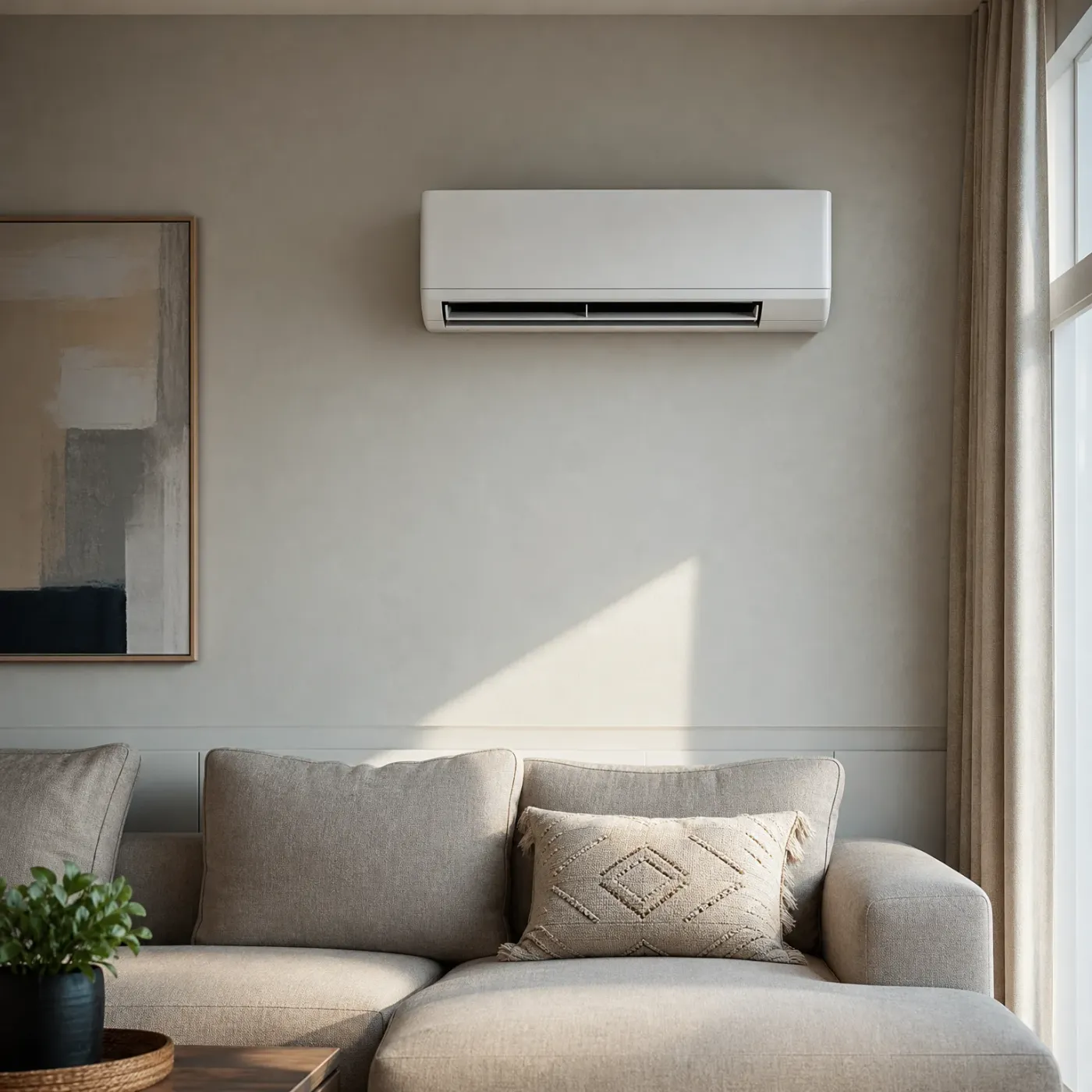
A white wall-mounted mini-split indoor unit on a light gray wall above a beige sectional sofa with a patterned cushion, beside a framed abstract artwork and a curtained window.

The right pro for this job

Connect with a pro

One form replaces the calls you'd make to find a mini split pro.

Sending the form costs nothing.