


Vermont's Mini Splits
Profile view of a bearded man wearing a dark green baseball cap and a dark gray T-shirt against a plain light background.

Why your mini split blows cold air in Vermont

Step 1 of 3: Equipment

Why is my mini split blowing cold air when it's set to heat?

You switched the mini split over to heat for the season, maybe your first cold snap of the year, and what's coming out of the vents is cold, not warm. You've checked the remote twice and it says heat mode. In a house that runs on oil, a mini split that won't heat isn't just an inconvenience, it's a system you're paying to idle while the oil burner picks up the slack.

It's likely stuck in defrost or low on refrigerant

A mini split blowing cold air in heat mode is usually doing one of two things. It's running a defrost cycle, where the outdoor unit briefly reverses to melt frost off the coil, and for a few minutes cold air comes through the indoor head before it switches back. That's normal on a cold Vermont morning when the outdoor unit is caked in frost. But if the air stays cold for more than ten or fifteen minutes, the system likely has a refrigerant leak, a failing reversing valve, or a problem with the outdoor unit itself. A unit that can't fully reverse into heat mode will keep drawing power without warming your house, which matters more here than almost anywhere given what electricity costs in Vermont.

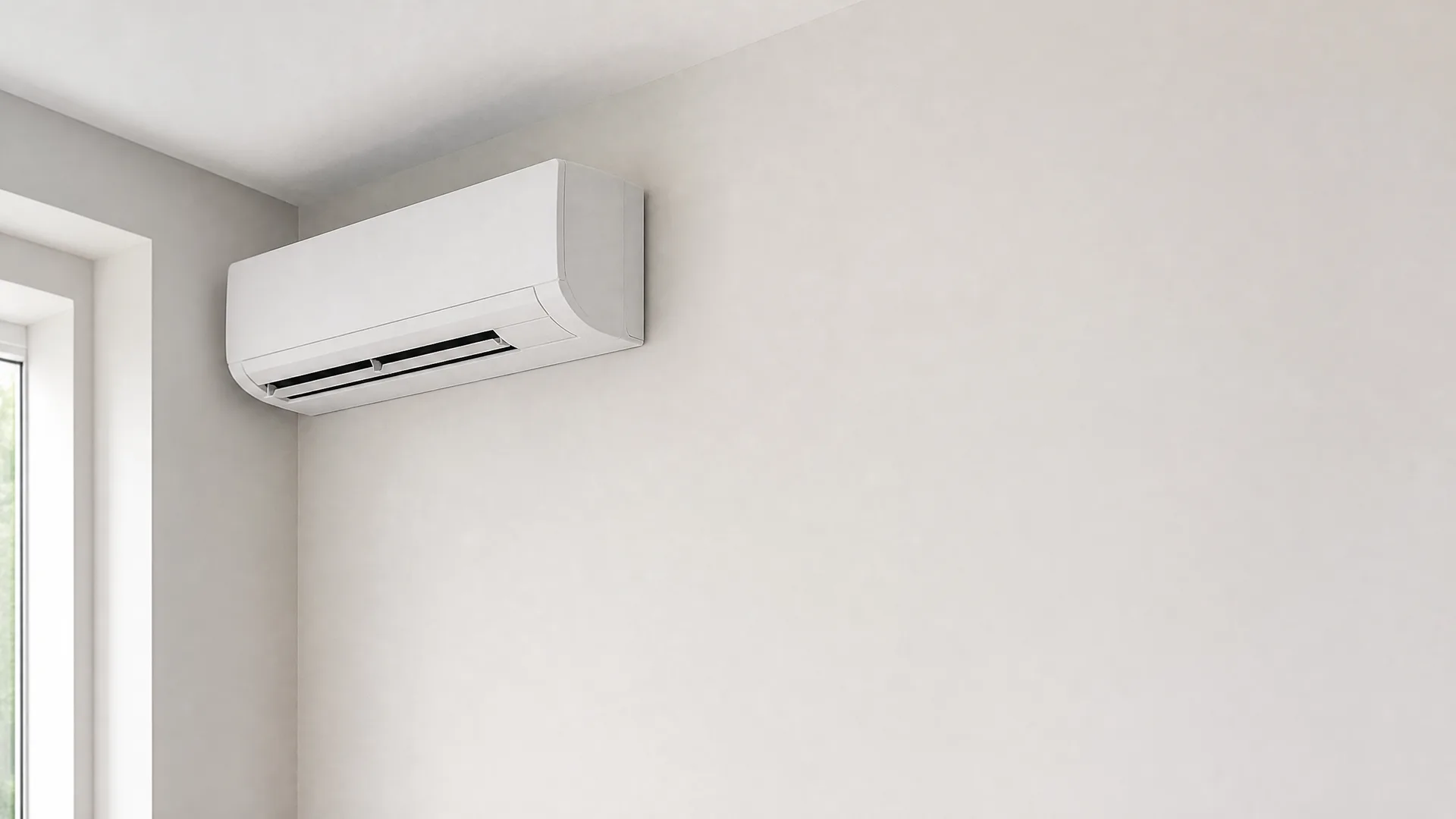
A white wall-mounted mini-split air conditioner installed high on a plain light-colored interior wall near a corner, with a window frame at the left edge.

Why it blows cold at startup

A mini split warms up before it pushes air into the room. The outdoor unit has to get its coil hot first, and most systems hold the indoor fan back or run it low until that happens. If yours kicks on blowing cold right away and stays cold past a few minutes, that delay logic isn't doing its job, or the reversing valve isn't fully switching over to heat mode.

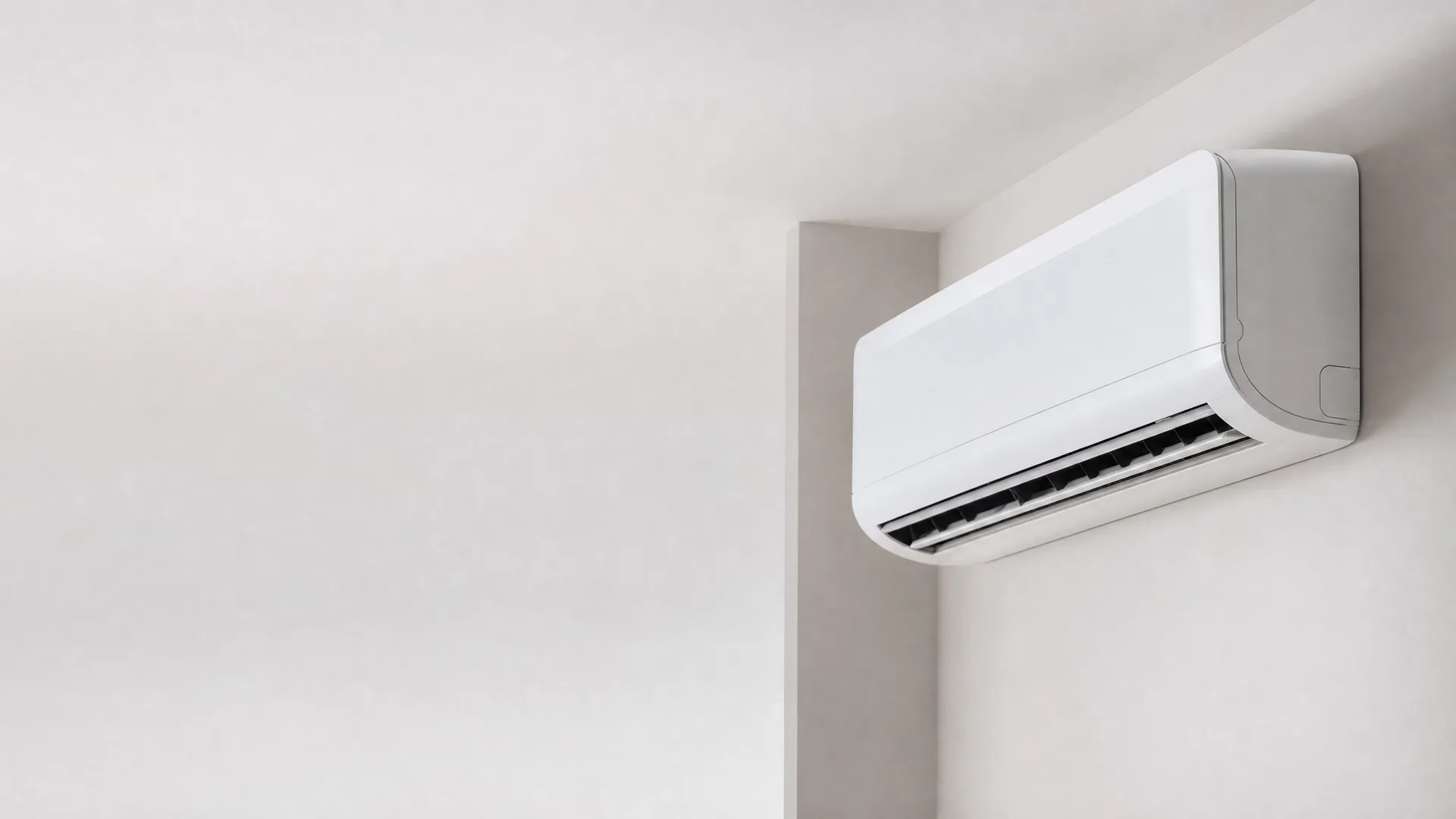
A white wall-mounted mini-split air conditioner installed near the top of an interior corner wall, with large blank light-colored wall space to the left.

What the cold points to

A reversing valve stuck halfway is a common cause, and so is a refrigerant charge that's dropped since the unit was installed. Either one leaves the indoor coil too cold to warm the air passing over it. With Vermont winters pulling heat from outside air for hours at a stretch, a system already running low on charge or with a sticking valve shows it fast, especially on the coldest nights.

A man in a dark blue shirt stands in an open front doorway of a stucco and wood-clad house, facing a blond woman seen from behind in the foreground on a stone walkway.

What this costs you if you let it ride

If your mini split is leaning on backup resistance heat to make up for cold air at the vents, you'll see it on the bill before you see it anywhere else. Vermont power rates make that an expensive way to stay warm, and most homes here already carry an oil furnace doing the heavy lifting. A mini split that's struggling isn't saving you anything against that oil bill, it's just adding to the electric one.

A unit that's blowing cold and getting ignored tends to get worse before the next cold snap, not better. Low refrigerant drops further, a failing reversing valve sticks for good, a dirty coil keeps icing over. Getting someone to look at it now means a contractor local to Vermont, who works on mini splits through the kind of winters you get here and knows which of these it usually is, reaches out to you directly. You're not left waiting on a call center or fielding quotes from three companies at once.

Interior corner with a beige sofa holding a dark green and a light cushion and a textured throw, a potted small-leaved tree beside a white-framed window, and a dark shallow bowl on a wooden coffee table in the foreground.
A white wall-mounted mini-split air conditioner on a light gray wall in an empty room with dark wood flooring, white baseboards, a tray ceiling with recessed lights, and a window at the left.

Running the way it should

This is a mini split doing its job. Warm air at the vents within a minute or two of startup, no cold blast first, no hunting between temperatures. Heat comes on steady and the room climbs toward what you set and holds there.


A wall-mounted mini-split air conditioner indoor unit with a yellowed plastic casing and dark horizontal vent louvers, installed on a plain light-gray wall.

Dust and residue mean the coil is working too hard

That buildup on top and the dark residue around the vents isn't just dirt. A dirty coil can't transfer heat the way it should, so the unit runs longer and leans harder on backup heat to catch up. That's often where cold air at startup comes from.

A woman in a cream cowl-neck sweater sits by a window with snow outside, in a dimly lit living room with a sofa, lit lamp, mirror, candles and a fireplace.
A woman in a gray turtleneck sweater sits beside a large window looking out at snow-covered evergreen trees, in a dimly lit living room with a lit fireplace, lamps, couch and houseplant.
A woman in a cream turtleneck sweater stands beside a large window with snow-covered ground and bare trees outside, in a dimly lit living room with lamps, a sofa and framed art.
A woman in a grey cowl-neck sweater stands indoors near a window, looking out at falling snow, with a lamp, framed picture and couch in the warmly lit room behind her.

Get your mini split to the right pro

Your request stays with one local pro.

You're not committing to anything by asking.

When it's the mini split, not the cold

A mini split in a cold climate has to work harder as the temperature drops outside, but it should still catch up. If the air stays cold for more than a few minutes, or the outdoor unit is caked in ice without a defrost cycle clearing it, that's the unit telling you something is wrong. A low refrigerant charge, a stuck reversing valve, or a failing defrost sensor can all leave it blowing cold no matter how long you wait. Those don't fix themselves, and running it this way through a Vermont winter just means more hours of backup heat picking up the slack.

When it's just the cold outside

Some of what feels wrong is just how a mini split behaves once the outdoor temperature drops hard, which happens often enough in Vermont. Heat pumps pull warmth from outside air, and there's less of it to pull as the mercury falls. The unit may run longer, cycle through defrost more often, or feel like it's barely keeping up on the coldest nights. That's not a sign anything's broken, it's the physics of the system working against a harder number outside. If the air does go warm again once the unit's caught up and holds the room at the set temperature, it's doing what it's built to do.

A wall-mounted mini-split air conditioner indoor unit with a dusty, discolored cover, installed near the ceiling on a plain light-colored wall.
Before you get your mini split repair
A white wall-mounted mini-split air conditioner unit installed high on a light gray interior wall below crown molding, with a bamboo-shaded window at the lower left.
After you get your mini split repair

What's Actually Happening Inside

  • During defrost the outdoor unit reverses briefly to melt frost off its coil, and the indoor fan can keep running while it does.
  • A reversing valve stuck or slow to switch is one of the more common reasons a mini split stays in cooling mode after you've set it to heat.
  • The thermistor that reads coil temperature can fail or drift, so the system never tells itself it's warm enough to push heat through.
  • Low refrigerant charge keeps the outdoor coil from getting hot enough, and the indoor unit blows whatever air it's getting, cold or not.
  • A clogged outdoor coil, especially one packed with snow or ice, cuts the heat transfer the whole cycle depends on.
  • Some systems hold indoor airflow low or off during startup on purpose, so what feels wrong at ten seconds can be normal at ninety.

A mini split moves heat by compressing refrigerant outside and letting it release that heat indoors. That cycle runs through a reversing valve, the part that decides whether the system is cooling or heating. When you flip the remote to heat, that valve is supposed to switch direction and send hot refrigerant gas to the indoor coil. If it's stuck, worn, or slow to move, the system stays on the cooling side no matter what the remote says, and the indoor unit keeps blowing the same air it was blowing in July.

The outdoor unit also has to fight frost. In cold, damp air, ice builds up on its coil, and the system has to pause and run a defrost cycle to clear it. During defrost it briefly reverses into cooling mode on purpose, and depending on the model, the indoor fan may keep moving air while that happens. That's a normal few minutes. What's not normal is cold air that doesn't warm back up once defrost ends.

A failing thermistor causes a quieter version of the same problem. That sensor tells the system how hot the outdoor coil has gotten. If it drifts or dies, the system can't tell itself it's ready to push heat through, so it holds back or never ramps up. Low refrigerant charge does something similar from a different angle: the coil never gets hot enough to begin with, so whatever the indoor fan pushes out stays cold.

A bearded man in a blue and brown plaid flannel shirt stands indoors looking out a window at snow-covered trees, with a ceramic mug on the windowsill.
A man in a blue T-shirt sits on a light gray sofa, laughing while looking at an open laptop in the foreground, with a framed picture, lamp and potted plant behind him.

Power costs 22.79 cents per kilowatt-hour statewide

At 22.79 cents per kilowatt-hour, every hour your mini split spends leaning on backup heat instead of its heat pump adds up fast. A unit stuck blowing cold air often means it's burning more power to make less warmth. That's worth catching early.

EIA-861 2025 statewide residential average

A mini split blowing cold air when it's set to heat almost always comes down to one of a handful of things: a reversing valve that's stuck, a stat sensor reading wrong, low refrigerant, or a defrost cycle that's running longer than it should. None of those get better with a Vermont winter sitting on top of them. The fix is someone who can look at the outdoor unit and the indoor head and tell which one it is, and that's easier with a local contractor who works on these systems all season and has seen what usually gives out in cold climates like this one. You'll be matched with one contractor, not a handful calling you back at once, someone licensed to do the work and familiar with how mini splits hold up through a Vermont winter. Catch it now and you're looking at a repair. Let it ride through the cold months and you're paying for backup heat you shouldn't need, on some of the highest power rates in the country, while the actual problem waits for you anyway.

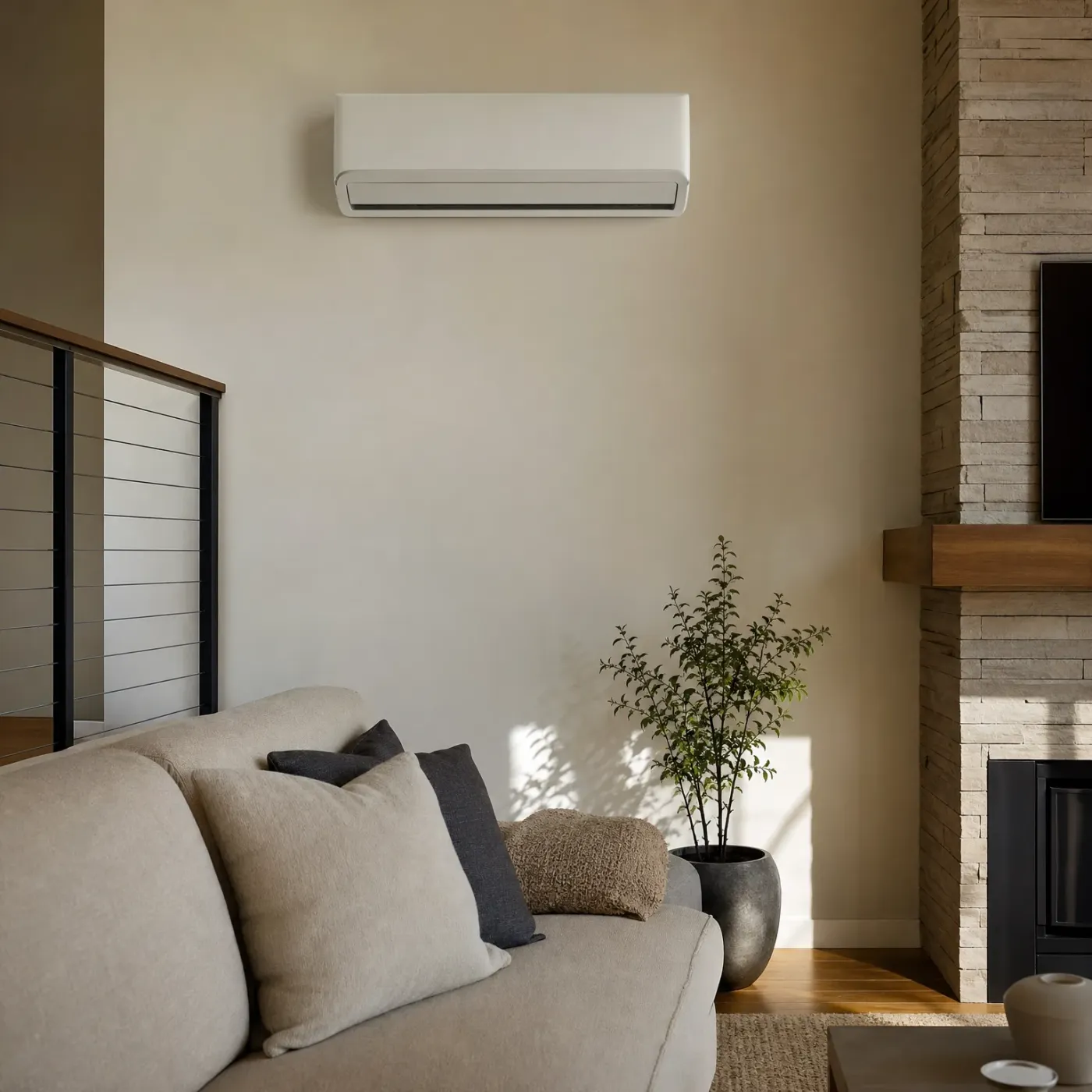
Interior living room with a white wall-mounted mini-split air conditioner high on a beige wall, a light gray sofa with cushions, a potted small tree, a stacked-stone fireplace with wood mantel and mounted TV, and a cable railing at left.

The right pro for this job

Find a licensed mini split pro

Your request goes to one pro, not a list of companies.

It costs nothing to send, and you don't have to hire anyone.