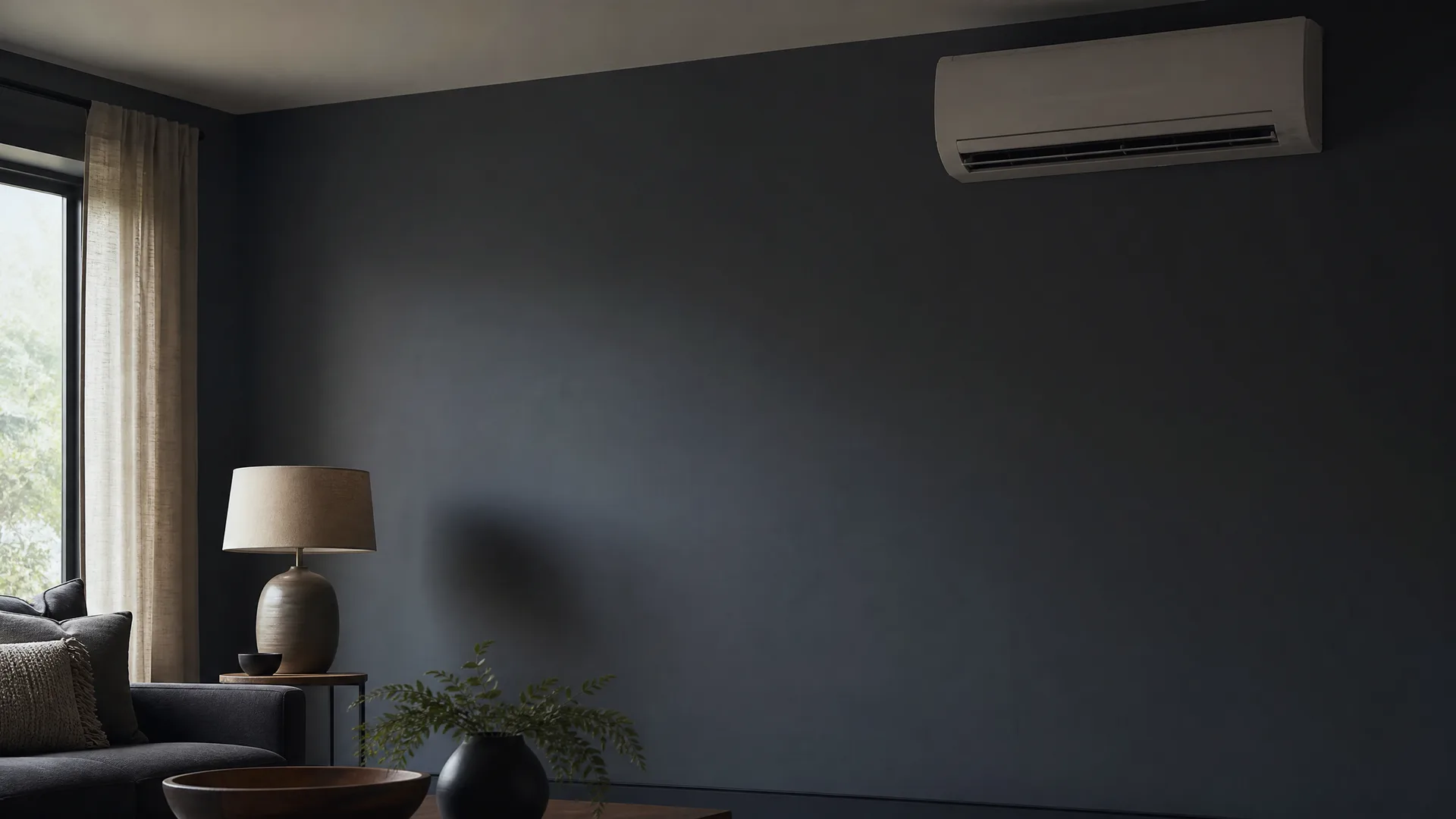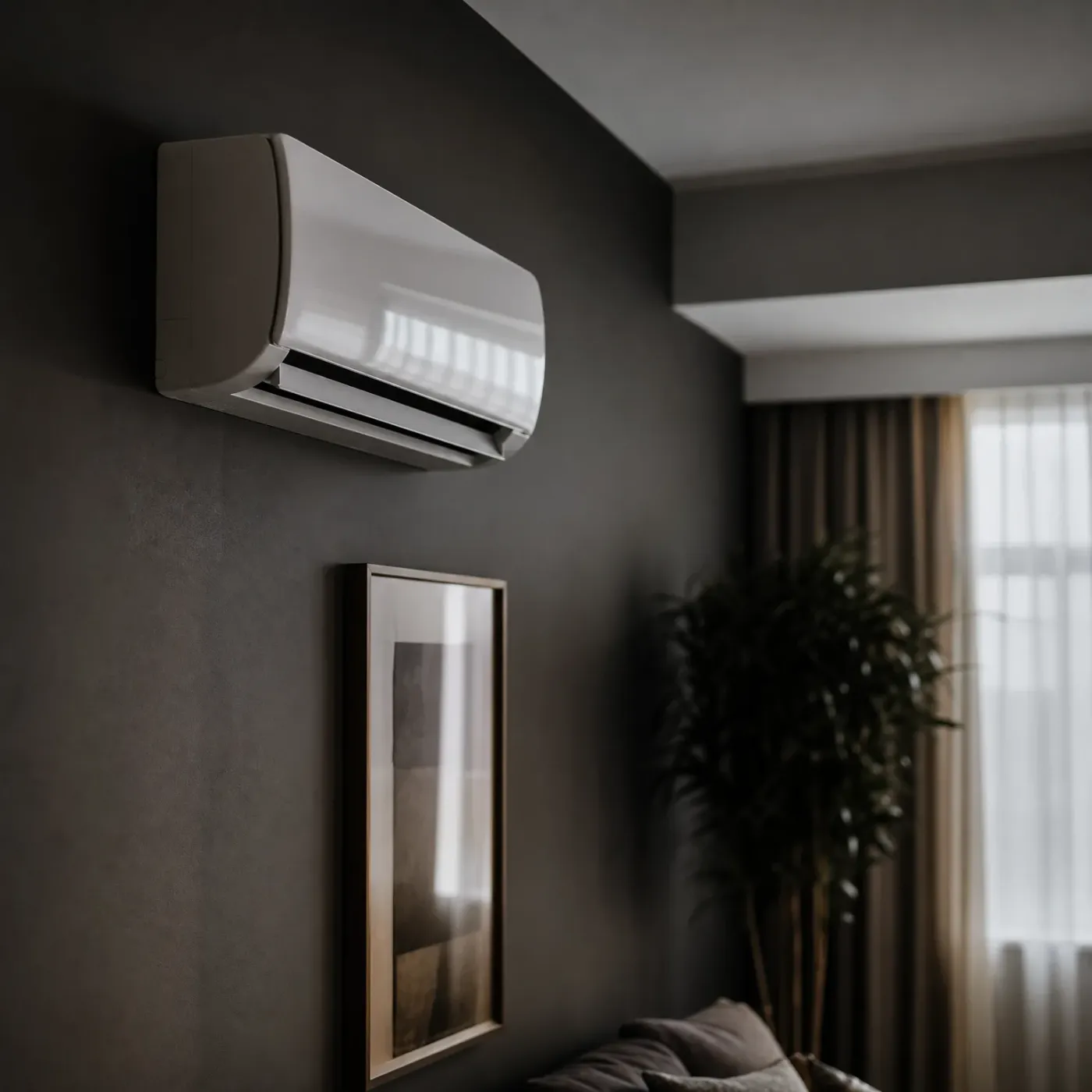
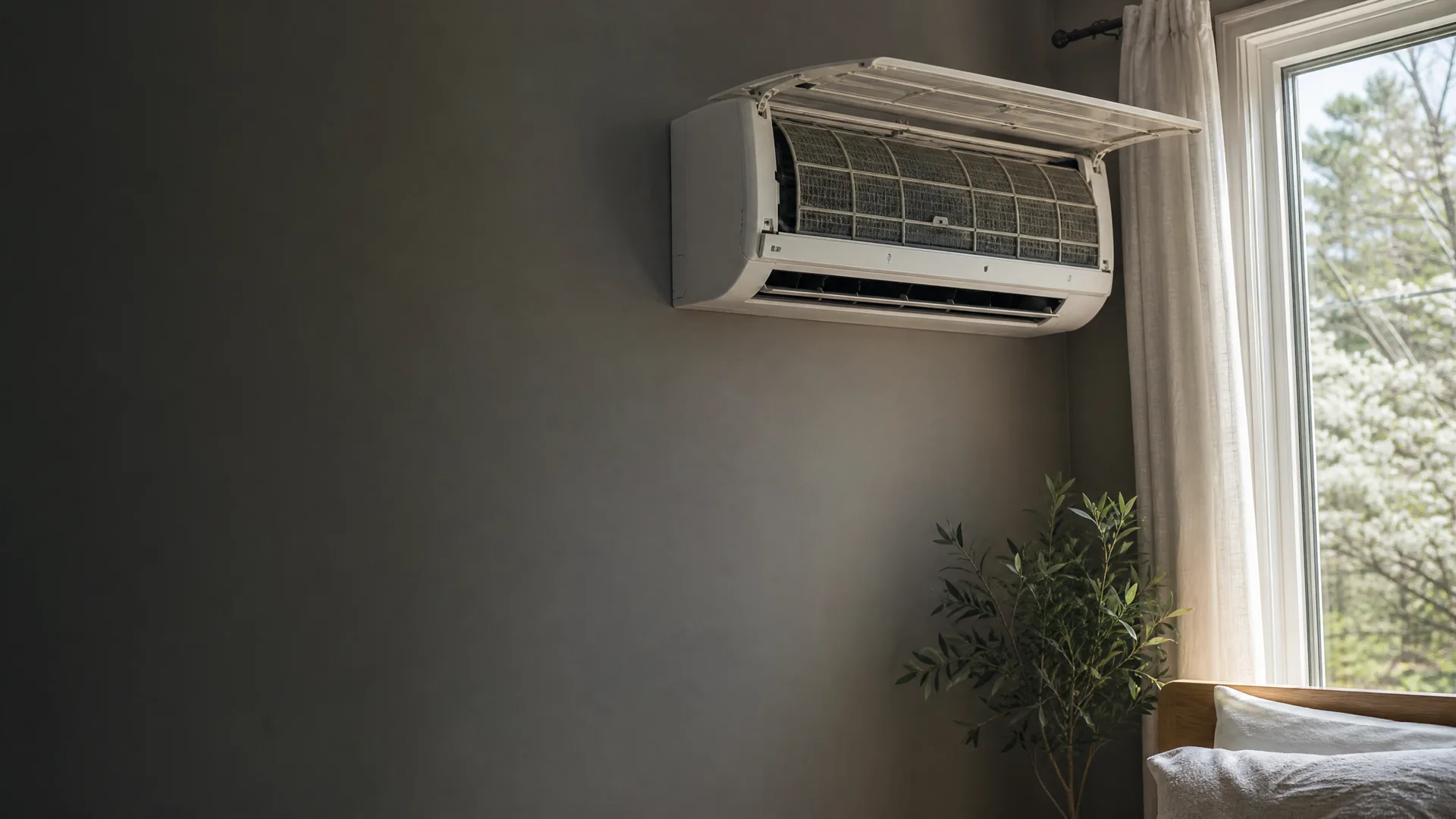






A white wall-mounted mini-split air conditioner on a dark gray interior wall above a framed picture, with a potted plant and curtained window to the right.

Matched to your mini split job

What a mini split tune-up covers in Vermont

A tune-up on your mini split covers filter cleaning, a check of the coils, the refrigerant charge, drainage, and the electrical connections, so it keeps running efficiently through a Vermont summer and whatever stretch of cold it also covers for you. Below, get matched with a contractor who works on mini splits in your area, instead of calling around and explaining your system to each one.

Find a mini split pro

A mini split tune-up covers the outdoor condenser and the indoor head together, since one system runs both. A technician cleans the indoor filter and coil, checks the outdoor coil for leaves and debris, confirms the refrigerant charge is correct, clears the condensate drain so it isn't backing up into the unit, and checks the electrical connections and the wall mount for anything loose. If your mini split handles heat too, the tune-up also covers the parts that let it pull heat from cold outside air, since that's a different job than cooling and it's where many Vermont systems get used hardest. A dirty filter or a weak charge makes the system work harder to hit the same temperature, and that shows up on your electric bill before it shows up as a breakdown. Catching that early is the point of the visit.

A wall-mounted mini-split air conditioner with its front cover open exposing the filters, on a gray interior wall beside a curtained window with green trees outside and a potted plant below.

You pull the front cover off the indoor unit before the weather turns warm enough to need it. Light comes in low through the bedroom window. The filter screen behind the cover is grey with a season's worth of dust, more than you expected. You run a thumb across it and it leaves a mark. This is the unit that got you through last summer without the heavy, sticky air other places deal with, and the one you lean on less once the oil furnace takes over for the cold months. You set the filter down to clean it, already thinking about what else behind that cover you can't check yourself, the coil, the drainage, whether the charge is still right.

A woman stands in the open doorway of a white stucco house holding the dark door, facing a man in a black cap and shirt seen from behind in the blurred foreground, with a potted flowering plant beside the entry.

What happens inside the head unit during a tune-up

A technician pulls the blower wheel apart from the housing to get at what the filter never catches. That blower wheel has dozens of small curved blades, and in a mix of oil heat and humidity, grime builds up on each one, not just the filter screen. A dirty wheel pushes less air, so the unit runs longer to reach the same temperature on your thermostat. Cleaning it is a separate step from wiping the coil, and it's the one most homeowners never see because the cover doesn't come off that far on its own.

The technician also checks the condensate pump or drain line inside the head unit, since a mini split pulls moisture out of the air even on a mild Vermont day and that water has to go somewhere. If you've gotten this far into researching what a tune-up actually covers, you're the kind of homeowner who'd rather know this before a technician is standing in your living room. Getting matched with one who already knows mini splits means you're not explaining the brand and the layout from scratch.

A living room corner with a beige sofa and cushion, a round wooden coffee table holding a pale ceramic vase of eucalyptus stems and a wooden bowl, and a curtained window with a potted plant above a latticed radiator cover in the background.
A gray-haired, bearded man in a dark coat dusted with snow stands smiling in a dimly lit room with a lamp, mirror, framed art, and a sofa in the background.
An older man with white hair and a beard, wearing a dark snow-dusted coat and scarf, stands in a warmly lit interior hallway with a framed landscape picture, a table lamp and a potted plant behind him, and a snowy view through a window at left.
An older man in a dark snow-flecked overcoat and scarf stands smiling in a warmly lit home entryway, with a glass-paned door showing darkness outside and a lamp-lit room visible through a doorway behind him.
An older man with gray hair and a beard, wearing a dark snow-dusted jacket and scarf, stands smiling in a warmly lit interior hallway with a lit table lamp, a vase of dried branches, and a framed picture in the background.

A mini split pro near you

If your mini split is also what you lean on for heat alongside the oil furnace, you already know what's at stake if it quits in January or struggles through a humid stretch in July. Finding someone to look at it usually means a string of calls, the same explanation repeated to each one, then waiting on quotes to see who gets back to you first. With power costs what they are in Vermont, a unit running dirty or low on charge is costing you more every month it goes unchecked. You don't have to sort through that yourself. Put in your request once and it goes to a contractor who works on mini splits in your area, and they reach out to you directly. No calling around, no repeating yourself, no pile of quotes to weigh against each other. Just one less thing sitting on your list before the weather turns.

Why the outdoor unit matters more here

The outdoor unit sits through everything Vermont throws at it: road salt in the air, leaves piling up against the coil, snow packed around the base if you run it for heat too. A technician clears what's built up around the coil and checks that it's still pulling air through properly. A coil that's choked with debris makes the whole system work harder to move the same amount of heat, and on a system you're already running hard against the cost of power here, that difference shows up on the bill.


What a low charge actually does

Refrigerant doesn't get used up the way oil in a furnace does. If the charge is low, it's because it's leaking out somewhere, and a mini split running low on charge has to run longer to reach the same temperature in your house. That extra runtime costs you on a power bill that's already among the highest in the country. Checking the charge during a tune-up catches a slow leak before it turns into a system that can't keep up on the hottest days or the coldest nights.

Power costs 22.79 cents per kilowatt-hour statewide

At 22.79 cents a kilowatt-hour, a mini split that's lost charge or is caked with dust costs you more every month it runs that way. A tune-up keeps it pulling only what it needs to heat or cool the house.

EIA-861 2025 statewide residential average

Skip the tune-up and the mini split still runs, at least for a while. It just works harder to move the same air, pulling more power every hour it runs at 22.79 cents a kilowatt-hour.

Keep up with it every year and the unit does less work to do the same job. The filter stays clear, the coils stay clean, and the system isn't fighting itself to heat or cool your house.

A woman wrapped in a cream textured blanket sits in an armchair beside a lit lamp and a dark window, with an open book in the foreground.
A smiling older woman with gray hair in a cream knit sweater stands in a dimly lit kitchen beside a window showing snow outside, with a round loaf of bread on the counter in the foreground.

What a Tune-Up Comes Down To

  • A mini split tune-up means a clean filter, a clear coil on both the indoor head and outdoor unit, and a refrigerant charge that matches what the system needs.
  • That work is what keeps the unit from pulling more power than it should at 22.79 cents a kilowatt-hour.
  • Skipping it doesn't stop the unit from running, it just means the unit works harder to do the same job.
  • Finding a contractor who services mini splits in Vermont usually means calling around and repeating the same description of your system to each one.
  • Getting matched with someone who already knows what your unit needs skips that part and leaves you with one call instead of several.
  • None of this changes what the oil furnace handles in January, but it does change what the mini split costs you the rest of the year.

A mini split tune-up is the filter, the coils, the charge, the drainage, and the electrical connections, checked and cleaned on both the indoor head and the outdoor unit. That's the whole job. Nothing about it is complicated to describe, even if the work itself takes a trained hand to do right. Done once a year, it keeps the system from working harder than it has to at 22.79 cents a kilowatt-hour, a rate that makes a dirty coil or a low charge cost more here than almost anywhere else. Skip it and the unit doesn't stop running. It just pulls more power to move the same air, month after month, until something finally gives out.

What usually slows this down isn't the tune-up itself. It's finding someone to do it. A string of calls to contractors who may or may not work on mini splits, the same explanation of your system repeated each time, quotes that are hard to line up against each other because nobody's describing the same job. That part is the real cost of staying on top of a system like this, and it has nothing to do with the unit.

The oil furnace still carries January on its own. What changes with a tune-up is what the mini split costs you the rest of the year, and whether it's ready for the next stretch of heat or cold without you having to think about it twice.

A dimly lit room with a dark gray wall holding a white wall-mounted mini-split air conditioner near the ceiling, with a sofa, table lamp, potted plant, and curtained window at left.

A local pro for your mini split maintenance

One form instead of hunting for a pro who does mini split tune-ups.

Step 1 of 3: Equipment