Tell us about the job
Takes about a minute. No obligation.
A contractor diagnosing a mini-split here does not look to cooling load to explain a failed compressor, because there is no cooling load to speak of. Homes in Lamoille County, VT have essentially no cooling season — no month of the year is warm enough to call for it. The compressor, the reversing valve, and the defrost controls carry the full demand of the heating season, and those are the components a contractor checks first. A refrigerant leak or a contactor failure that shows up in January was not building since summer; it was building through cold cycling alone.
A house built for baseboard heat or a wood stove was retrofitted for a mini-split at some later point, and what the contractor finds when the unit comes open frequently includes line-set work and drainage routing that were fit around the existing structure rather than planned for it. Half the homes in Lamoille County, Vermont were built in 1982 or earlier (2020-2024 ACS 5-year). Stock that old was not built with a dedicated refrigerant pathway in mind, so a refrigerant fault or drainage problem in this county often pulls the repair out of the indoor head and into how the original install was run through the walls. The contractor traces that path before the repair cost is known.
The Parts of a Mini-split a Contractor Checks During Repair
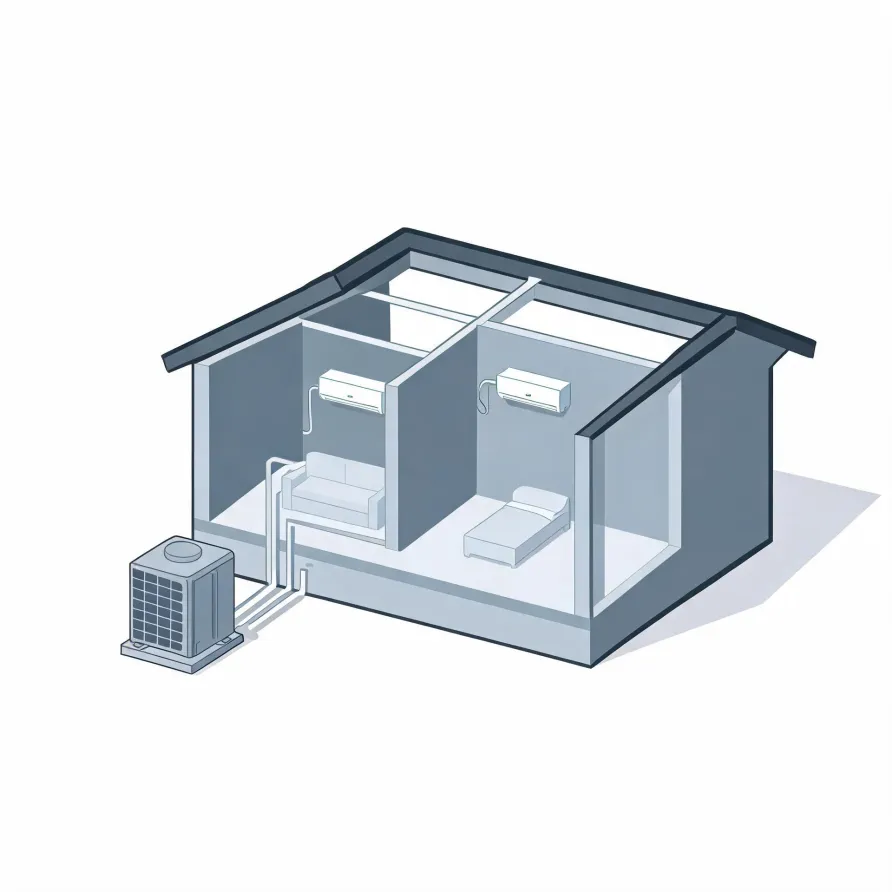
The indoor air handler mounts high on a wall inside the room and is the piece homeowners notice first when something goes wrong. It holds the evaporator coil, a blower fan, and the filters. When cooling or heating drops off, or the unit makes noise it did not used to make, the contractor starts here.
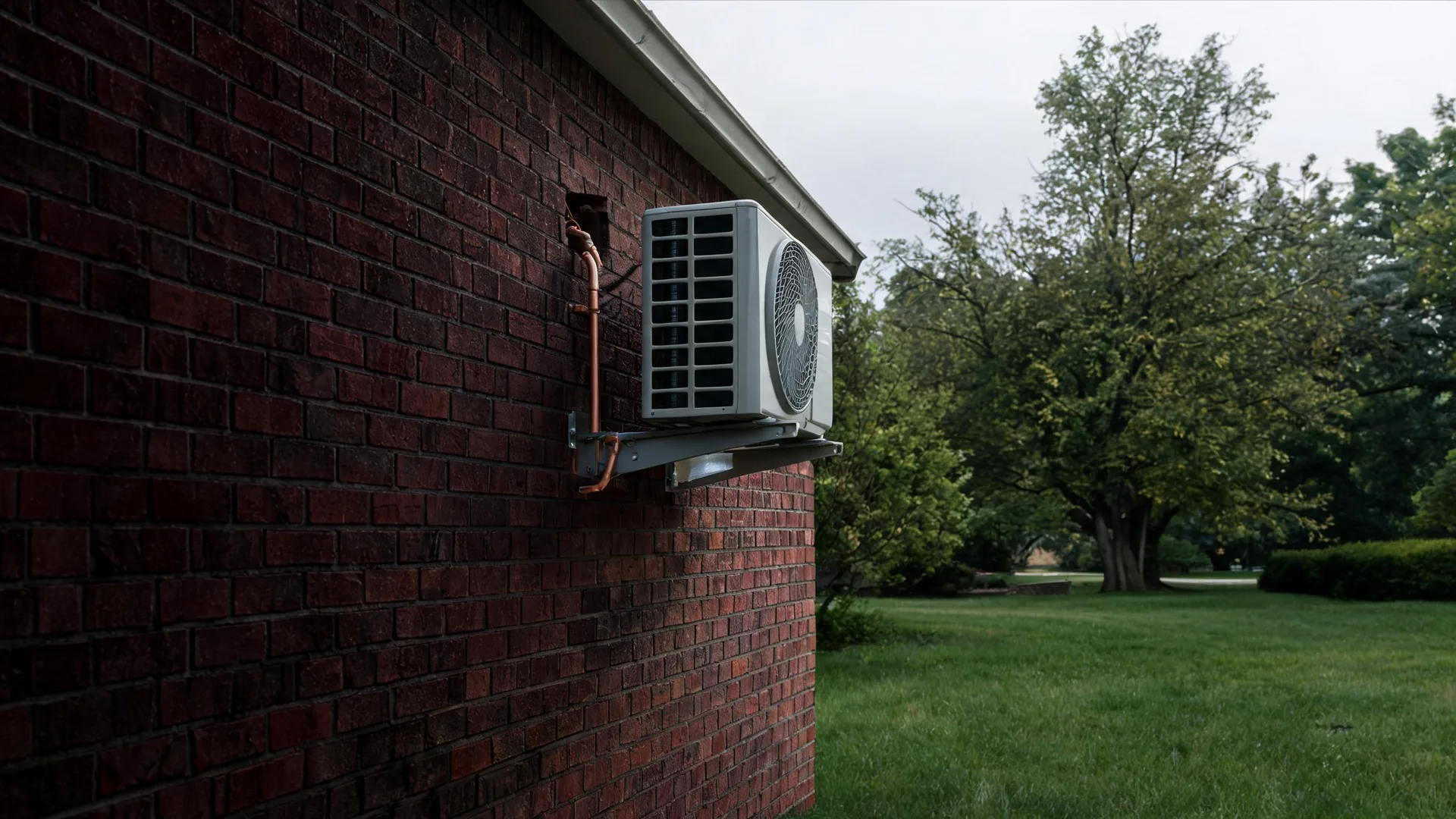
The outdoor condenser unit sits on a pad or bracket outside the house and holds the compressor and condenser coil. A refrigerant line set and a control cable run through the wall to connect the two units. The condenser is where the contractor looks when the system runs but cannot hold temperature, or fails to start at all.
The drawing shows a typical mini-split layout, and a licensed contractor determines which components are involved in any specific repair.
Find a contractor in Lamoille CountyLamoille County, by the numbers
82 severe weather events were recorded in Lamoille County, Vermont between 2015 and 2024.
NOAA National Centers for Environmental Information, Storm Events Database, bulk CSV export, events 2015-01-01 through 2024-12-31.Half the homes in Lamoille County, Vermont were built in 1982 or earlier (2020-2024 ACS 5-year).
U.S. Census Bureau, 2020-2024 American Community Survey 5-Year EstimatesLamoille County, Vermont holds 14,320 housing units (2020-2024 ACS 5-year).
U.S. Census Bureau, 2020-2024 American Community Survey 5-Year EstimatesOwners occupy 72.9% of the occupied homes in Lamoille County, Vermont (2020-2024 ACS 5-year).
U.S. Census Bureau, 2020-2024 American Community Survey 5-Year EstimatesRepair Rules & Codes for Mini-Split Work in Lamoille County, Vermont2 sourced standards and regulations
Licensing and Legal Requirements for HVAC Repair in Lamoille County, Vermont
Vermont splits the trade across two specialty licences and a contractor may hold one without the other: field A1 covers automatic gas or oil heating including geo-thermal and ground source heat pumps, and field C3 covers refrigeration or air conditioning including air-to-air heat pumps.
Vermont reaches HVAC work through its electricians’ licence rather than an HVAC licence, and the requirement stops at the front door of a house: anyone performing electrical work in Vermont must be licensed as an electrician unless the work is in a residential building containing two or fewer dwelling units.
Severe Weather Events in Lamoille County
Vermont weather puts real stress on heating and cooling equipment, and Lamoille County gets its share of conditions that push systems hard. Repair needs follow weather patterns, which makes the local record worth understanding.
82 severe weather events, 2015–2024. Source: NOAA National Centers for Environmental Information, Storm Events Database.