Tell us about the job
Takes about a minute. No obligation.
Sizing a mini-split here means working out what the heating side can deliver on the coldest days, because that is the only season the system is called to serve. Homes in Rutland County, VT have essentially no cooling season — no month of the year is warm enough to call for it. The compressor runs hard through a long heating season, and the refrigerant circuit that would otherwise share that wear across cooling cycles never picks up that load. A contractor quoting this job prices and positions the unit around heating capacity alone, and back-up heat becomes a real question rather than an afterthought.
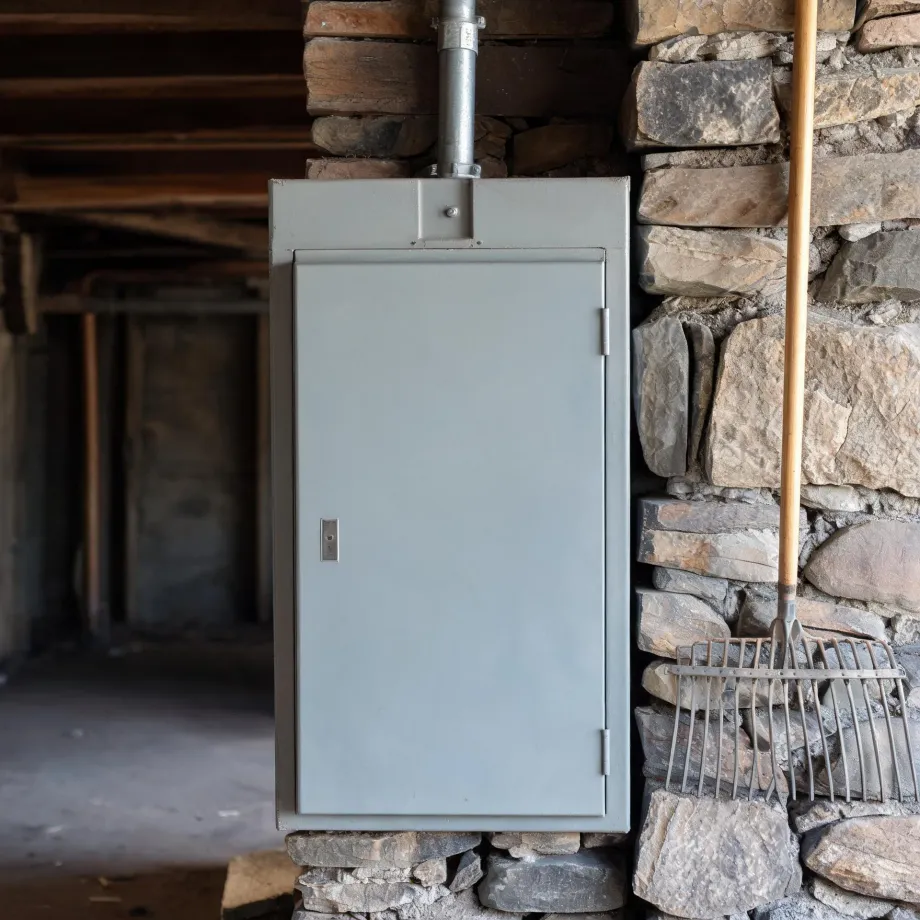
Electrical panels in a house built for something other than today's equipment are the variable that decides whether a mini-split install is straightforward or not. Half the homes in Rutland County, Vermont were built in 1969 or earlier (2020-2024 ACS 5-year). Wiring sized for the loads of that era was not planned around the draw of a modern mini-split, and a contractor pricing the job has to assess what the service panel actually holds before anything else is quoted. The unit itself is specified and ordered in a day. What takes longer to resolve is whether the existing electrical supports it.
The Mini-split System a Contractor Installs in Your Home
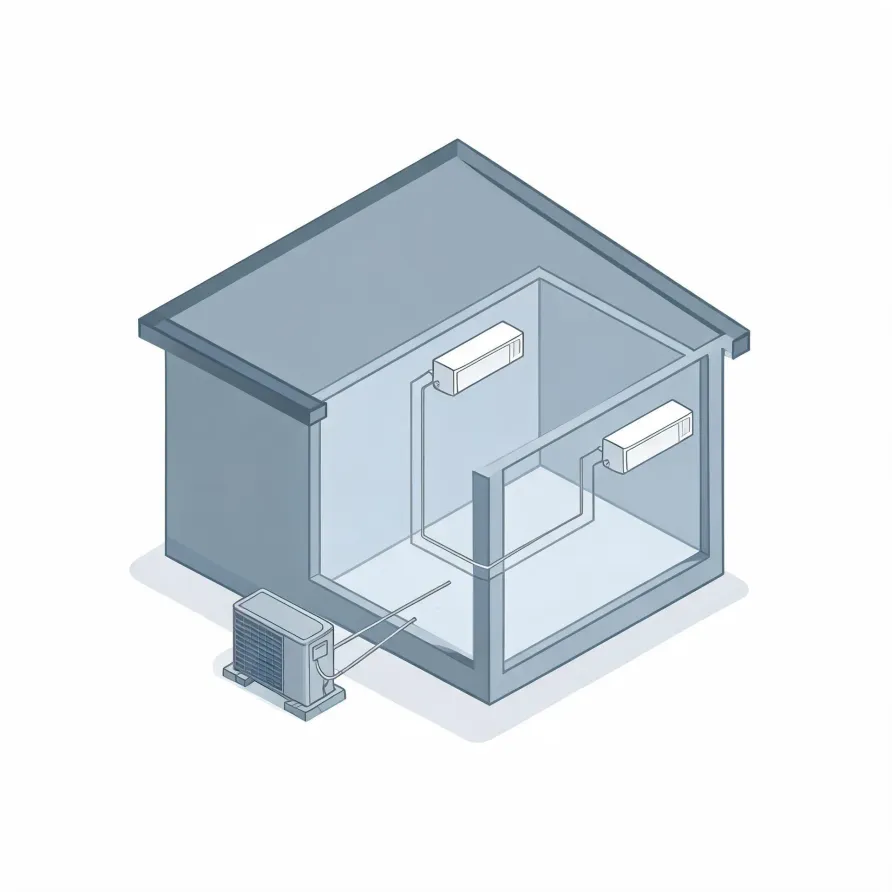
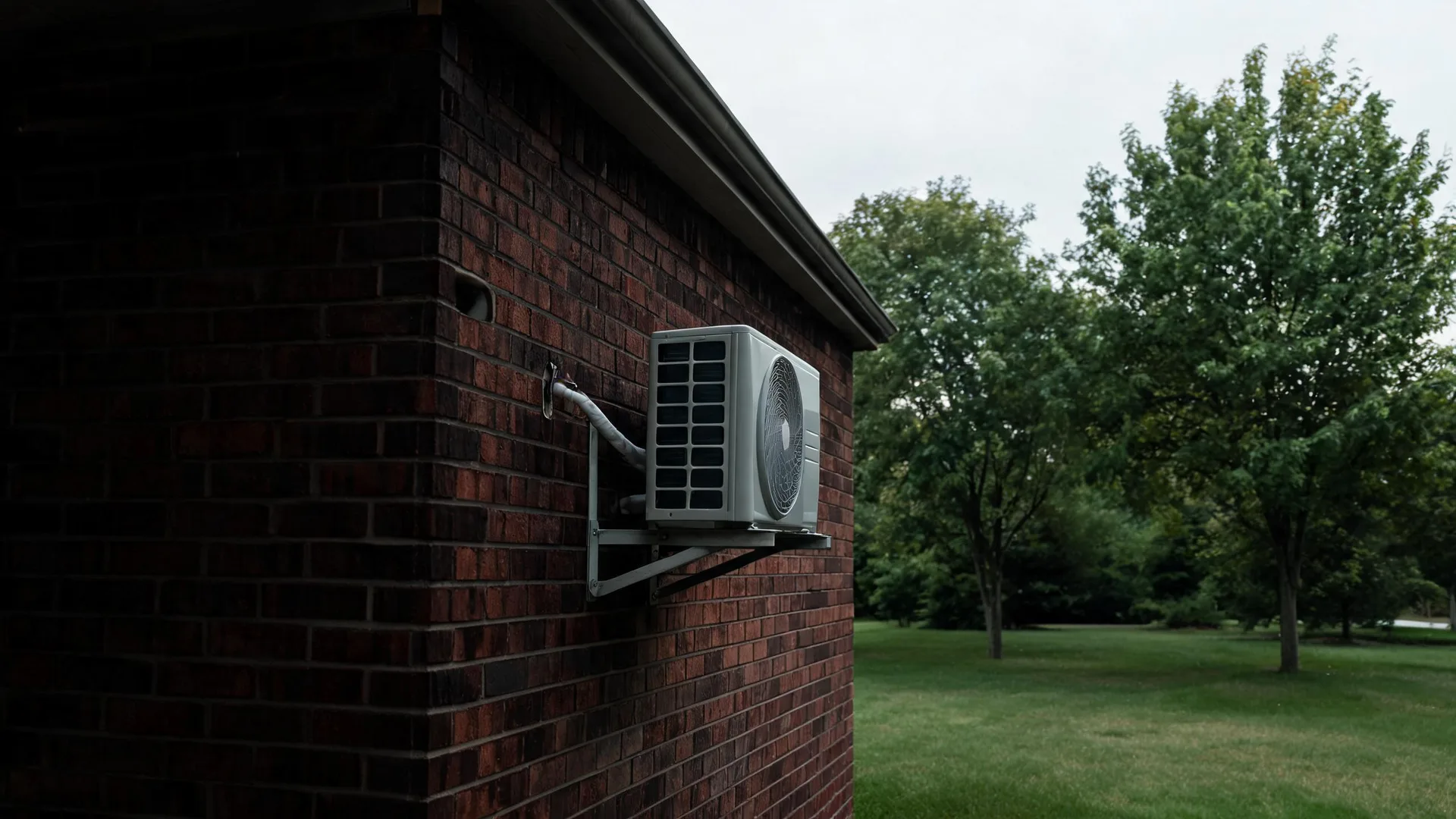
The indoor air handler is the piece you will see every day. It mounts high on an interior wall in the room being conditioned and delivers heated or cooled air directly into that space. Outside the house, the outdoor unit sits on a pad or brackets against the exterior wall and houses the compressor and the condenser coil.
A refrigerant line set runs through a small opening in the wall to connect the two units, carrying refrigerant between them. A condensate drain line runs from the indoor handler to move moisture out of the house, and a power line connects the outdoor unit to your electrical supply.
The drawing shows the general layout of these components, and a licensed contractor determines exactly how they are configured and positioned in your particular house.
Find a contractor in Rutland CountyRutland County, by the numbers
178 severe weather events were recorded in Rutland County, Vermont between 2015 and 2024.
NOAA National Centers for Environmental Information, Storm Events Database, bulk CSV export, events 2015-01-01 through 2024-12-31.Half the homes in Rutland County, Vermont were built in 1969 or earlier (2020-2024 ACS 5-year).
U.S. Census Bureau, 2020-2024 American Community Survey 5-Year EstimatesRutland County, Vermont holds 33,991 housing units (2020-2024 ACS 5-year).
U.S. Census Bureau, 2020-2024 American Community Survey 5-Year EstimatesOwners occupy 75.1% of the occupied homes in Rutland County, Vermont (2020-2024 ACS 5-year).
U.S. Census Bureau, 2020-2024 American Community Survey 5-Year EstimatesCodes & Standards Governing Mini-Split Installation in Rutland County, Vermont2 sourced rules and standards
Licensing and Legal Requirements in Rutland County, Vermont
Vermont splits the trade across two specialty licences and a contractor may hold one without the other: field A1 covers automatic gas or oil heating including geo-thermal and ground source heat pumps, and field C3 covers refrigeration or air conditioning including air-to-air heat pumps.
Vermont reaches HVAC work through its electricians’ licence rather than an HVAC licence, and the requirement stops at the front door of a house: anyone performing electrical work in Vermont must be licensed as an electrician unless the work is in a residential building containing two or fewer dwelling units.
Severe Weather Events in Rutland County
Rutland County's climate puts real demands on heating and cooling equipment, and those demands vary year to year depending on what the weather brings. A mini-split sized and installed for local conditions handles that variability better than one specified for somewhere else.
178 severe weather events, 2015–2024. Source: NOAA National Centers for Environmental Information, Storm Events Database.