Running the way it should
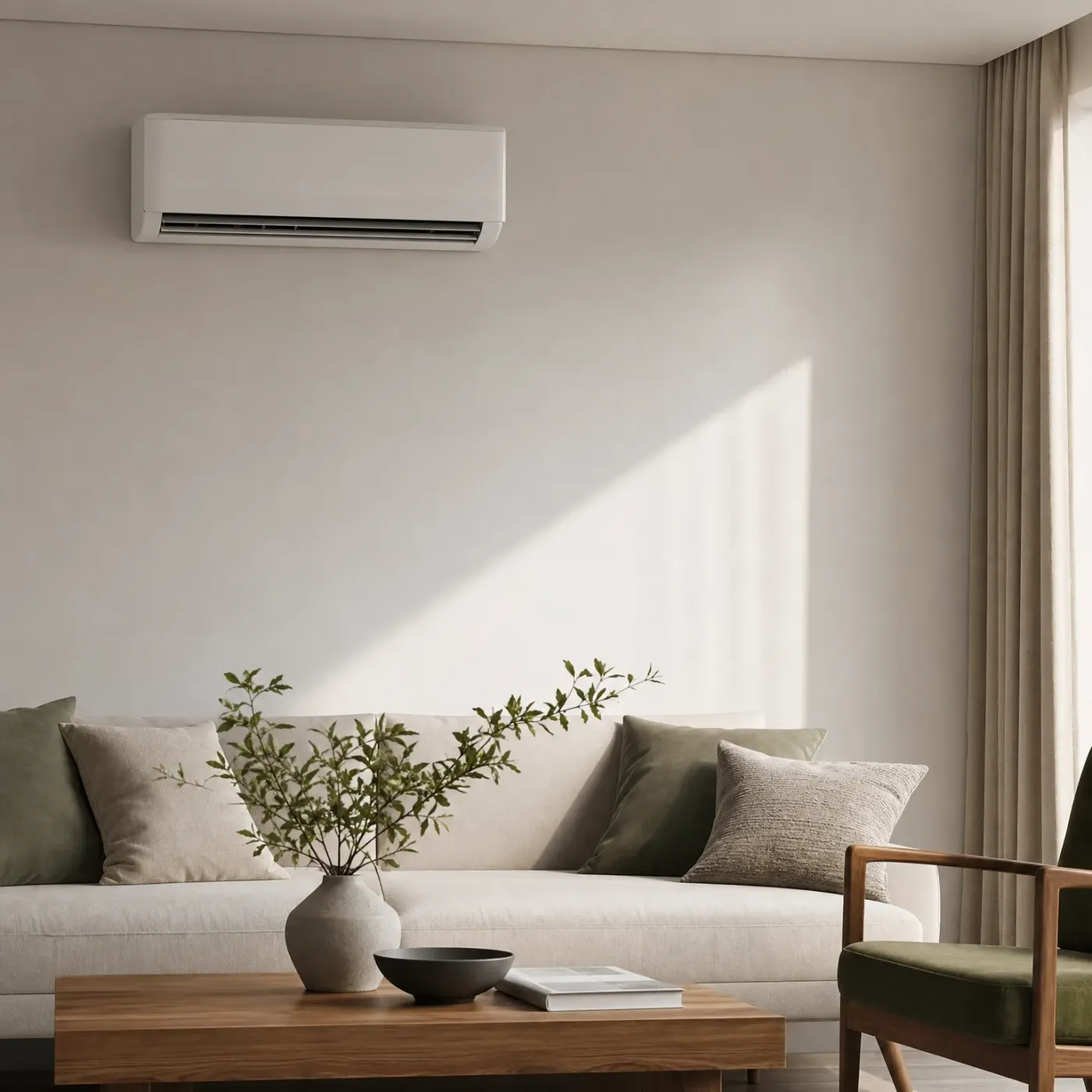
The unit draws air through clean and blows warm or cool air evenly across the room. No streaking on the wall, no grime building up on the housing. That's what steady, correct operation looks like day to day.

A mini split costs less to run than baseboard heat in Vermont, as long as it's sized and installed to keep working through your coldest weeks. Baseboard heat runs on resistance electric, and at Vermont's power rates that gets expensive fast. A mini split moves heat instead of generating it, so it delivers more warmth per dollar even in January. The catch is cold climate performance. Below a certain outdoor temperature, a mini split that isn't built and set up for Vermont winters loses efficiency or can't keep the room warm at all, and you end up leaning on baseboard or an oil furnace to cover the gap. The right cold climate unit, sized for your home and installed so it doesn't ice over or short cycle, is what makes the savings real. Get that wrong and you're paying for two heating systems instead of one.


Baseboard heat works by resistance. Electricity runs through a coil, the coil heats up, and that's the whole process. One unit of power in gets you one unit of heat out, and that's as good as it gets. A mini split does something different. The outdoor unit pulls heat out of the air outside, even when it's cold, and moves it indoors through the refrigerant line. That's why it can put out more heat energy than the electricity it draws to run. It isn't making heat, it's moving it. That process has a limit. As the temperature outside drops, there's less heat out there to pull, so the unit has to work harder and its output falls off. That's the whole reason sizing matters for Vermont winters, and why the coldest week of the year, not the average one, is what an installer should be designing around. Inside the house, the head needs room to breathe. Furniture or curtains blocking it mean less air moving, less heat delivered, no matter how well the outdoor unit is working.




Below freezing, a mini split still moves two to three times more heat into your home than the electricity it draws. Baseboard heat never clears one to one, no matter how cold it gets outside.
That gap is why a mini split costs less per hour of heat even on a hard January night. The colder it gets, the more that difference shows up on your bill.


A mini split is already running in your house, or you're pricing one against the baseboard heat you have now. Either way, the install is what decides whether you see the savings this page just walked through. Set it wrong for a Vermont winter and the outdoor unit struggles on the coldest nights, or the backup heat kicks in more than it should, and the numbers stop working in your favor. Finding someone who installs these in Vermont, and sizes them for the cold here rather than a mild climate, usually means a string of calls, explaining your house more than once, and sorting through quotes you can't really compare. Submitting your project here sends it to one local contractor, someone who installs and services this equipment through Vermont winters and knows what it takes to keep a mini split ahead of baseboard heat when it's well below freezing outside. That's the work this page can take off your hands.

The unit draws air through clean and blows warm or cool air evenly across the room. No streaking on the wall, no grime building up on the housing. That's what steady, correct operation looks like day to day.

Dust and grime coat the unit, and the wall above it has gone dark. That staining usually means the coil inside isn't draining or filtering the way it should. A mini split working that hard against grime isn't the one saving you money on your power bill.
At almost 23 cents a kilowatt-hour, every unit of electricity your mini split uses costs more here than in most states. That rate is exactly why the efficiency gap matters so much in Vermont: a system pulling two to three units of heat per unit of power keeps that math in your favor, but a poorly sized one loses ground fast.
EIA-861 2025 statewide residential average
A mini split beats baseboard heat on cost in Vermont, but only if the install matches what Vermont winters actually do to the equipment. Baseboard heat turns electricity into heat one to one, and that never changes. A mini split can move two to three times that much heat for the same power, but it only does that when it's sized for your home and set up to keep working on the coldest nights instead of dropping into backup resistance heat. That's the whole case this page has made, and it comes down to one thing you can't shop around: who does the installing.
This is where finding someone matters more than it might seem. You could spend an evening calling around, explaining your setup to three or four companies, and comparing quotes that don't even cover the same work. Or you could get matched with one licensed Vermont contractor who already knows what a mini split needs to get through January here, because they've set up and serviced them through winters like this one before. They know what sizing mistakes leave a system leaning on backup heat, and what a correct install looks like in a house like yours.
You don't get flooded with calls from a handful of companies trying to win the job. You get one contractor who's local, licensed, and already knows the equipment. That's what decides whether the savings on paper show up on your power bill.
Only one pro gets your request, so you hear from one company.
You're not committing to anything by asking.