Send the form, and lining up the mini split tune-up stops being yours to chase.
Set your mini split to heat mode and leave it running at a steady temperature all day, instead of letting it drop when you leave and cranking it back up later. A mini split works hardest on the swing between a cold setback and a warm target. Held steady, usually somewhere in the high 60s, it runs at a lower, steadier output, which matters more here than almost anywhere, since Vermont power costs more per kilowatt-hour than in most of the country.
Most homes in Vermont still heat with oil, and the mini split is doing a specific job alongside that furnace: carrying the mild stretches and taking the edge off the coldest mornings so the oil burner isn't the only thing working. That only holds if the unit itself is clean and running right. A clogged filter or a coil packed with frost changes how it behaves at the setting you picked, no matter how carefully you picked it.
That's where maintenance earns its keep, and it's also where most homeowners get stuck. You could spend an afternoon calling around, explaining the same thing about your unit to every voice on the phone, asking who services mini splits around here, waiting on quotes that take days to come back, then trying to compare them against each other without much to go on.
Send the form instead. Once it's in, the work of tracking down someone qualified to look at your system stops being something you have to do. You won't be stuck repeating your situation to a new person every time you pick up the phone, and you won't be sorting through quotes on your own. That part is off your plate.
What's left is simple: get the setting right, and get someone out to make sure the unit can actually hold it through a Vermont winter.
Keep the temperature steady, somewhere around 68 to 70 degrees, and leave the fan running even when the unit isn't actively heating. Vermont winters bring stretches of real cold, and that's when a mini split's outdoor coil can start icing over if it's cycling on and off hard against a low setback. A unit left to run steady defrosts itself on a normal schedule and doesn't have to work as hard to recover lost ground. On the coldest nights, below 5 degrees or so, a mini split alone may not keep up, and that's normal, not a sign it's broken. Most homes here lean on oil heat as backup for those nights, and that pairing is how the system is meant to run. What matters most for keeping that balance right through the winter is a clean filter and a clear outdoor unit, since a blocked coil is what turns a cold night into a real problem.
Power costs 22.79 cents per kilowatt-hour statewide
At almost 23 cents a kilowatt-hour, every degree you hold steady instead of cranking back up costs you on the meter. That's the trade worth knowing before winter sets in, and it's also why a mini split that's maintained to run efficiently matters more here than in cheaper-power states.
EIA-861 2025 statewide residential average
Running clean
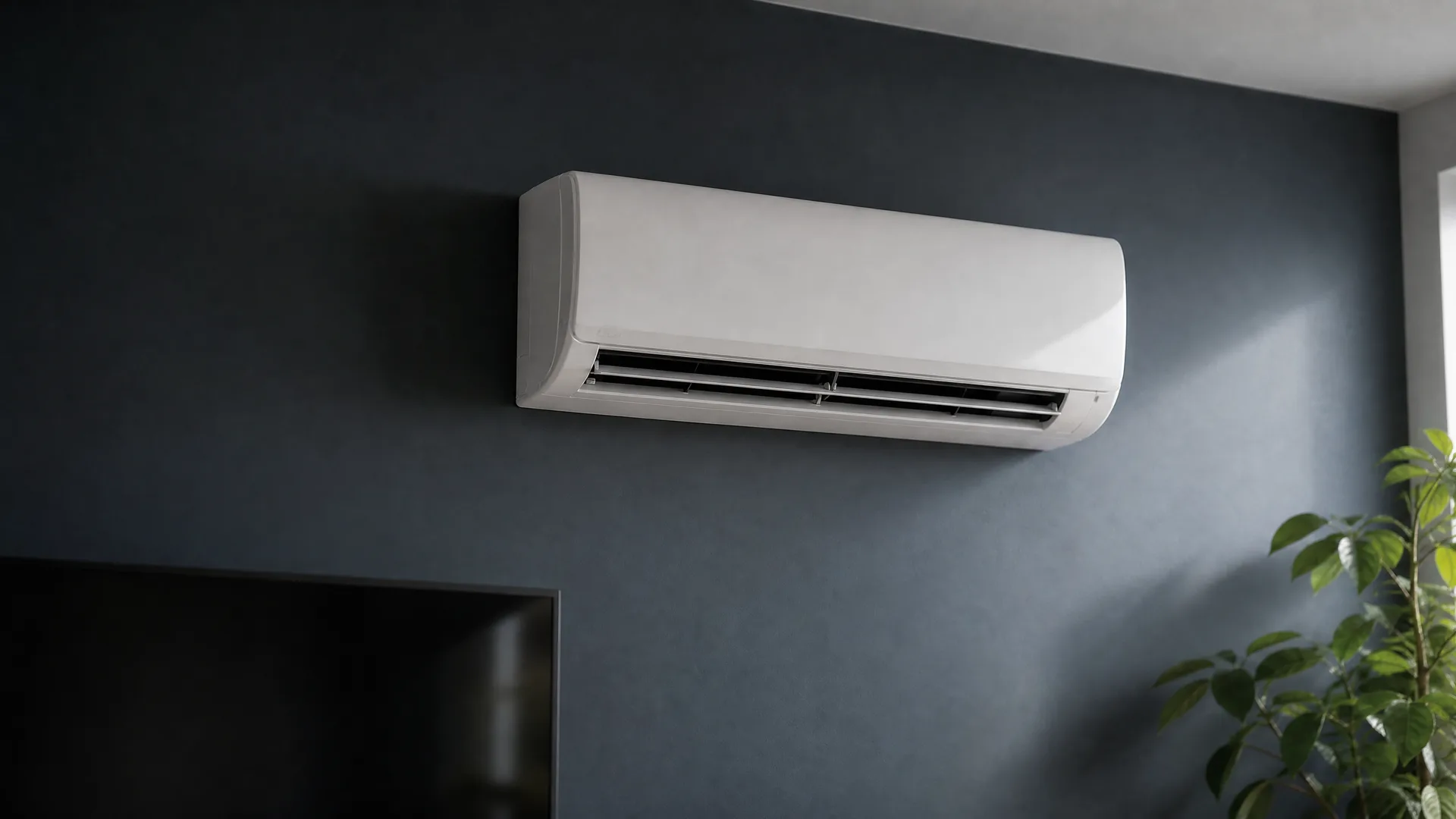
A mini split that's kept up pulls air through a clear filter and an outdoor coil free of ice and debris. It holds the temperature you set without straining, and it heats the room evenly instead of blowing cold air before it catches up. This is what steady, all-day heat looks like when the unit behind it is sound.
Running neglected
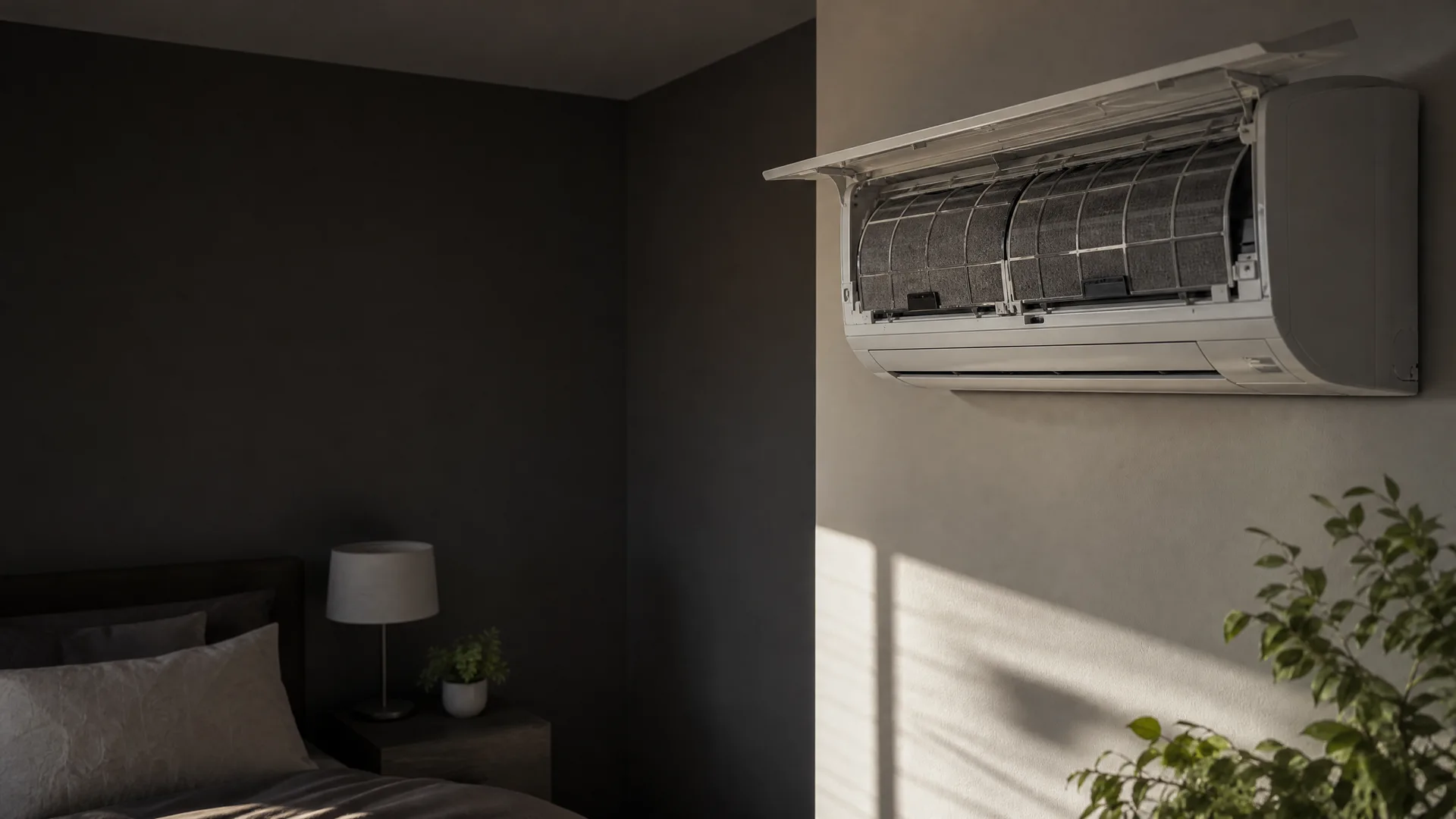
Dust builds up on the casing and inside, where it blocks airflow across the coil. A clogged filter or an iced outdoor unit forces the compressor to work longer for less heat, and you feel it as rooms that won't quite get warm. Left alone, it keeps drawing power while doing less with it.
A mini split doesn't make heat the way a furnace does. It pulls heat out of the air outside, even when that air is well below freezing, and moves it indoors. That's why the outdoor unit needs clear space around it all winter, not buried in a snowbank or blocked by a drift against the bottom vent. The coil out there collects frost as it works, and the system runs a defrost cycle on its own to melt that ice before it switches back to heating. Snow piled against the unit stops that cycle from doing its job. Inside, the filter behind the head matters just as much. A filter clogged with dust or pet hair forces the unit to pull in less air, so it runs longer to reach the temperature you set. And if the system is low on refrigerant, it won't reach that temperature at all. It'll just run and run, which looks like a broken thermostat but isn't. On Vermont's coldest nights, once outdoor air drops into the single digits, expect the unit to lose some of its reach and lean on a backup heat source.
How a mini split actually heats
A mini split pulls heat out of outdoor air that's well below freezing, which is why the outdoor unit needs a clear path for airflow all winter.
The outdoor coil runs a defrost cycle on its own, reversing briefly to melt ice before switching back to heating.
If snow piles up against the outdoor unit or blocks the bottom vent, that defrost cycle can't clear the coil properly.
The indoor head has a filter that catches dust and pet hair, and a clogged one makes the unit pull in less air and run longer to hit your set temperature.
Most mini splits lose real heating capacity once outdoor air drops into the single digits or below, so a second heat source matters on the coldest nights.
A unit that's low on refrigerant will run constantly without reaching your set temperature, which looks like a thermostat problem but isn't.
A clean filter and a clear outdoor coil let the unit hold your set temperature without straining to catch up.
Dust packed into the vents chokes airflow, so the unit runs longer and leans harder on backup heat to keep up.
You pull the front cover up and the filter screen is grey with a winter's worth of dust, matted enough that you can't see through the mesh. It's a mild spring afternoon, the kind where you finally notice the unit again because the heat's off and the room's quiet. You run a thumb across it and dust comes away in a line. All those nights you had it holding steady at 68, this is what it was pulling air through. You set the screen on the bed, meaning to rinse it, and start to wonder what else back behind the cover never got looked at all winter.
You can set the temperature right and still end up calling someone when the coil ices over mid-January or the unit starts blowing lukewarm air on the coldest night of the year. Most homes around here run on oil, so the mini split is likely doing real work holding down that bill, and with power priced the way it is in Vermont, a unit that's straining costs you twice over. Finding someone who services mini splits, not just installs them, usually means a string of calls, explaining the same problem to each one, then sitting on quotes trying to guess who actually knows these systems. Send the request instead and that search is off your plate. You keep an eye on the filter and the setting. Someone who knows the equipment handles the rest, and you're not the one tracking down who that should be.
Why oil backup still matters
Most Vermont homes have an oil furnace or boiler as the main heat source, with the mini split added later to cover part of the load. On the coldest nights, the mini split's output drops as the outdoor temperature drops, and the oil system picks up the rest. A mini split that's been serviced keeps pulling its share of that load longer into a cold snap. One that's neglected falls back sooner, and the oil system ends up carrying more than it was sized to carry on its own, which shows up as more oil burned over the winter.
What a tune-up actually checks
A maintenance visit on a mini split means clearing the outdoor coil of debris, checking the refrigerant charge, and confirming the indoor filter and blower are moving air the way they should. A low charge makes the compressor work harder for less heat, and most people can't check refrigerant level themselves. The same visit catches a defrost cycle that's not resetting properly, which is often the first sign of a unit that will ice over on the next hard freeze. These are small checks, but they're the difference between a unit that holds up through January and one that doesn't.
Run the mini split alongside your oil system and let each do the part it's good at. The mini split carries the mild days efficiently, oil backs it up when the outdoor temperature really drops, and neither one gets pushed past what it can do well.
Shut the oil system off and lean on the mini split alone through a Vermont winter, and you're asking one outdoor unit to keep pulling heat from air that's working against it on the coldest nights, with no backup when it falls behind.
Before you get your mini split maintenanceAfter you get your mini split maintenance
Why does the room feel cold even with the unit running
You've got it set to 70 and the display says it's working, but the air coming out feels barely warm, or the room near the window still feels off. Maybe the outdoor unit has a ring of ice building around the base, or it's running longer stretches than it used to just to hold the same temperature. Some of that is normal in a hard Vermont cold snap. But if it's happening on an average night, not just the brutal ones, the unit is straining, and the oil system behind it is quietly picking up more of the load than it should, which shows up on that oil bill before anyone diagnoses why.
Average out a Vermont summer and the dew point sits around 59°F, per NOAA climate records for the state. That's mild, the kind of air that doesn't sit heavy on your chest. It matters for your mini split because a unit that isn't fighting damp air all summer runs its cooling cycles short and even. But summer this easy also means the unit spends most of the year in heat mode, working through a Vermont winter instead. That's where wear actually piles up, not in the mild months.
NASA POWER T2MDEW county cells weighted by homes
A steady setting, a unit that can hold it
Set the temperature, keep it steady, and let the mini split and the oil system split the work between them. That's the whole answer. What decides whether the unit can actually hold up its end all winter is whether the filter and the outdoor coil are clear enough to let it work the way it's built to.
Right now that's a filter you haven't checked and a coil you can't see from the window, and no way to know which contractor in your area actually services mini splits until you start calling around and asking. Send the form instead and that search is off your plate. No more sorting through names, explaining the same setup to three different people, or weighing quotes against each other. Someone who knows this equipment takes it from here, and you go into the cold stretch knowing the part you couldn't check yourself has been looked at.